
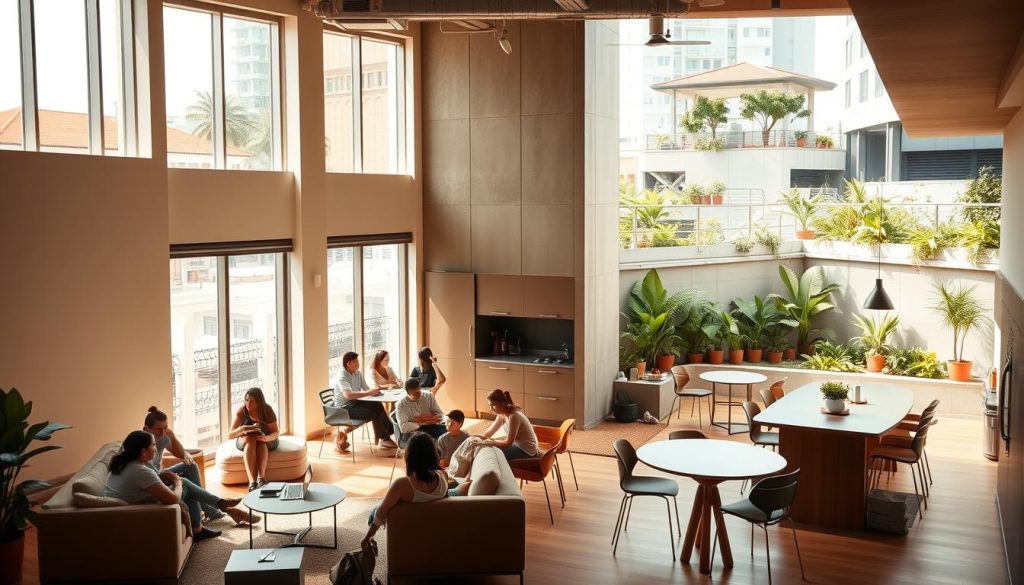
Did you know co-living spaces in Singapore often have over 95 percent occupancy? This trend is changing how we live in cities. It offers affordable and flexible housing options. It combines personal space with community through shared areas.
Young expats, freelancers, and digital nomads are changing their housing views. Co-living spaces have Wi-Fi, gyms, and gardens. This article explores co-living’s many sides. It shows how it’s changing urban living in Singapore.
The co-living concept has changed how we view urban housing. It mixes private living with shared amenities. This offers a balance between personal space and community interaction.
Co-living spaces have private rooms in larger units. They have communal areas for socializing and working together.
Co-living means living with others in a shared space. This space often has kitchens, lounges, and co-working areas. It’s popular with young professionals looking for affordable housing in cities.
Co-living focuses on community and shared experiences. This makes it different from traditional rentals.
Co-living spaces are attractive because they’re affordable. Sharing rent and utilities can save a lot of money, which is important in expensive cities.
Co-living also offers a chance to meet new people. This is great for those who want to connect in a new city. The demand for co-living is rising, thanks to remote work and city living.
Young adults find co-living beneficial. It lets them live in central, furnished places without the upkeep of a whole apartment. This is very appealing.
Communities in co-living spaces often host events. These events help residents build relationships and network. As co-living grows in Singapore, it’s a great option for those who want a career and a social life.
The way we live in cities is changing, and Singapore is leading the way. The rise of co-living shows a big shift in how we live together. This change comes from trends that make shared living spaces popular in the city.
In the early 2010s, co-living spaces in Singapore first attracted expatriates. Now, locals are also embracing this way of living. The growth of remote work and the gig economy has made short-term, flexible housing more needed.
Co-living offers affordable options, with prices from $800 to $3,500 a month. Companies like Hmlet and Cove cater to a wide range of people. They attract digital nomads and young professionals with their flexible pricing.
Urbanization is changing how we live. As cities get bigger, people want flexible and community-focused living. Co-living spaces offer amenities like co-working areas, gyms, and lounges.
These features help us feel connected and part of a community. They’re great for newcomers and expatriates. Plus, co-living spaces are often near public transport and local shops, making life easier and more connected.

Co-living spaces are changing urban living. They offer more than just a place to live. They are designed to bring people together.
With kitchens, lounges, and workspaces, they encourage teamwork and friendship. This makes living together a positive experience.
Shared spaces are key in co-living communities. They provide areas for eating, working, and relaxing. This leads to more chances for people to meet and share.
Sharing ideas and skills strengthens our connections. It brings joy to our daily lives.
Community events are vital in co-living. They include dinners, workshops, and exercise classes. These events help us feel part of a community.
They also let us learn from each other. This enriches our experiences. Meeting people from different backgrounds can lead to lasting friendships.
Technology makes co-living better by connecting us. Digital platforms help us share news and organize events. They make it easy to stay in touch.
This ensures our community stays vibrant. It helps us network and share resources. Our interests and lifestyles align more easily.
Sustainability is key in co-living spaces. We use eco-friendly designs to make homes inviting and help the planet. These designs include energy-saving gadgets, recycled stuff, and shared gardens.
Our goal is to use our power to make the future better.
Adding sustainable features to co-living spaces cuts down our harm to the environment. Shared spaces mean less need for personal stuff, which cuts down energy use. This choice shows we care about living sustainably.
Co-living boosts both sustainable living and community spirit. Living with others who share your values makes you want to do good for the planet. Studies show 75% of people are more likely to live sustainably in these settings.
Together, we can cut down food waste and use less plastic.
Choosing wisely in co-living can cut our carbon footprint by thirty percent. Using public transport and buying local food are big steps. These actions help us live greener lives.

Co-living places like Dash Living give discounts for eco-friendly choices. By living sustainably, we help our communities and the planet. It shows how much we can achieve together.
Learn more about how co-living is changing city living.
The choice between co-living and traditional housing is growing more important for young adults in Singapore. It’s key to understand the price, lease flexibility, and community aspects. This helps in making the right choice.
Co-living is cheaper than traditional housing. It’s about 20 to 50% less expensive than renting a private apartment. For young professionals in Singapore, this is a big deal. Co-living offers affordable rates, unlike traditional apartments that keep getting pricier.
Co-living is more flexible than traditional housing. It offers shorter lease terms, from 4 to 12 months. Many allow month-to-month changes. This suits the changing lives of young adults and digital nomads. Traditional leases, on the other hand, are longer, often a year or more.
Co-living creates a lively community. It hosts events and activities, unlike traditional housing. 58% of co-living residents make close friends, providing social support. This community feeling is missing in solo living.
| Feature | Co-living | Traditional Housing |
|---|---|---|
| Average Cost | 20-50% less than private rental | Rising rental fees |
| Lease Terms | 4-12 months, often flexible | Typically 12 months or more |
| Community Engagement | Regular events and activities | Less community interaction |
| Deposit Requirements | Little to no upfront costs | Varies, often significant |
In summary, co-living is a great option for young adults. It offers affordable living in a community setting. With rising property prices in Singapore, co-living is a smart choice for many.
Co-living in Singapore is changing fast, showing us what’s next for these spaces. They’re becoming more than just places to live; they’re community centers. With new tech, living here will get even better, combining ease with modern life.
After the pandemic, these spaces are focusing on cleanliness, privacy, and community. This change makes them better for everyone.
New co-living spaces are introducing fresh designs. TAP’s latest at 161 Lavender Street has 76 co-living rooms, with almost 90% leased. This shows people really want these spaces.
These places offer private rooms and shared areas for everyone. Future designs will likely include green materials, open spaces, and areas for people to meet.
Technology is making co-living smarter. It adds features like smart home controls, making life easier. Residents can adjust their space with just a tap on their phone.
Co-living spaces might also have co-working areas with fast internet. This helps people work and live well together. Digital platforms will help connect residents, making life more convenient.
After the pandemic, co-living focuses on health and safety. These spaces now value privacy and cleanliness while keeping a community feel. They’re using better cleaning and contactless services to meet these needs.
With high occupancy rates, co-living might change how we think about owning homes. It’s showing us the value of living together and working as a team.
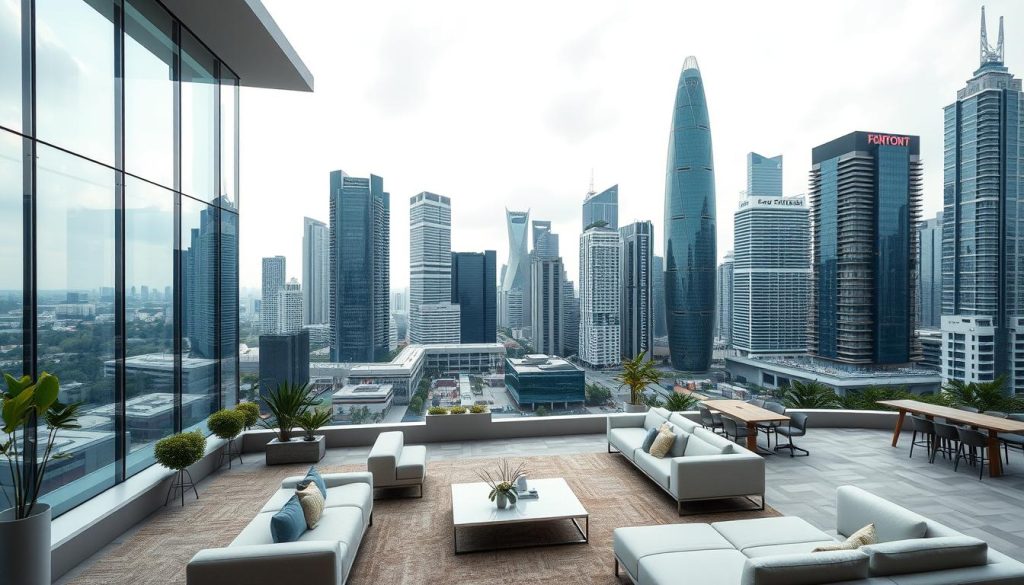
The co-living market in Singapore is filled with diverse players. Each offers unique living experiences that fit modern urban lifestyles. With over 9,000 keys available, leading brands are at the forefront of this fast-growing sector. Innovation and community engagement are key to their success.
Brands like Coliwoo, Hmlet, and Figment have shaped the co-living market in Singapore. Coliwoo holds about 20% of the market, showing its strong presence. They offer a range of properties, such as Coliwoo Balestier 320 and Coliwoo Hotel Amber.
Hmlet and Figment also stand out for their quality living spaces. They cater to different groups, from young professionals to digital nomads.
Resident testimonials highlight the appeal of co-living spaces. Many say they feel a stronger sense of community than in traditional housing. For example, one resident formed friendships and joined community events, enriching their urban life.
Others praise the affordability of these spaces. They allow for better locations and amenities like gyms and co-working spaces.
Success stories of co-living brands in Singapore show their ability to meet changing needs. Travelers, locals, and expatriates seek adaptable living solutions. Brands have responded well, with new developments and conversions like Cooliv Waterfront and GSM Building.
These projects meet the demand for flexible and community-focused co-living spaces.
Choosing a co-living space is an exciting journey. It involves many factors that can greatly affect our daily lives. It’s important to consider these factors to find a place that fits our needs and lifestyle. With more professionals choosing co-living, knowing what to look for can lead to a great living experience.
When looking for a co-living space, several key elements are important. Being close to work, grocery stores, and public transport is key. It helps us manage our time better and makes our daily routines easier. Also, understanding the cost of co-living is essential. The monthly rent usually covers utilities and access to shared spaces, with extra fees for some services.
Shared amenities are key to a great co-living experience. They include gyms, pools, kitchens, and coworking spaces. These amenities help us connect with others and build a community. It’s important to know what amenities are available to get the most out of our living space.
| Co-living Space | Key Shared Amenities | Potential Costs |
|---|---|---|
| Urban Haven | Gym, Swimming Pool, Coworking Space | $1,200/month (utilities included) |
| CoWork & Live | Communal Kitchen, Lounge Area, Study Pods | $950/month (additional for events) |
| Creative Junction | Art Studio, Event Space, Rooftop Garden | $1,100/month (utilities + events included) |

Our journey through co-living in Singapore has been exciting and life-changing. We’ve seen how it has deeply influenced our lives through diverse community stories. These stories show the challenges of city life and the life changes that come from forming connections.
Every resident brings their own story, making our community vibrant. Zhen, a digital designer, found his creative spark in co-living. He said, “Living with like-minded people inspired me. I never knew how inspiring my surroundings could be until I moved here.”
Co-living is more than just sharing costs. It gives us a sense of belonging in Singapore’s competitive world. We share meals and have spontaneous gatherings, fostering friendships and support networks. It helps us feel less isolated in the city.
Joining the co-living community has led to remarkable changes in our lives. It has helped us grow personally and professionally, leading to fulfillment. We engage in activities that promote well-being and innovation, uplifting our lives together.
| Aspect | Impact |
|---|---|
| Social Connections | Fostering friendships that lead to support networks |
| Professional Growth | Collaboration opportunities with other residents |
| Emotional Well-being | Reduced feelings of isolation and enhanced support |
| Life Changes | Inspiration to pursue new passions and projects |
Our stories and experiences in co-living show it’s more than just sharing space. We’re building enriching relationships and making life-changing decisions. In this fast-paced city, we find comfort and inspiration in each other’s company, guiding our co-living journey.
Co-living in Singapore comes with its own set of rules and challenges. Knowing the housing laws is key for everyone. It makes sure everyone follows the rules, making living together better.
Tenants need to know their rights. This includes privacy and who is responsible for upkeep. It’s important for a good living space.
Housing laws in Singapore have rules for co-living. For example, zoning laws say how many people can live together. These rules change by area, affecting where co-living can happen.
Building codes are also important. They cover safety like fire and building strength. Safety checks help follow these rules, keeping everyone safe.
Tenant rights are key for a good co-living space. Tenants should know about privacy, upkeep, and eviction rules. Co-living offers shared amenities, but health and cleanliness rules must be followed.
Knowing these rules helps protect everyone. It makes co-living a positive experience for all.
In Singapore’s changing co-living scene, professional services play a big role. Keeping living spaces clean and well-maintained boosts the resident experience. Regular upkeep ensures communal areas are welcoming and perfect for both chill-out and socializing.
Maintenance is key in co-living spaces. It keeps shared areas looking good and working well, making residents happy. Access to clean facilities makes everyone proud of their community, encouraging more social activities.
We’re proud to offer top-notch cleaning services for co-living spaces. By taking care of daily cleaning, we let residents focus on their goals. Our dedication to cleanliness makes living better, creating a friendly and lively community.
Curious about our co-living offers in Singapore? We invite you to reach out for more information. Our flexible living options are tailored to fit your lifestyle. With over 9,000 units managed by more than 20 operators, we cater to young professionals, expatriates, and students.
Our focus is on providing a comfortable living space and a vibrant community experience. This enriches your daily life.
Contact us today to learn about our current promotions. You’ll discover the benefits of our professional cleaning services. We simplify your living experience by bundling essential costs like utilities and internet into one package.
This makes financial planning easier and eliminates hidden fees. It gives you peace of mind as you settle into your new home. To explore these opportunities and more, simply reach out to us.
For immediate assistance, use WhatsApp at +65 9434 1391. It’s a direct channel for your inquiries, with no obligation for a quotation. As we navigate the evolving co-living landscape, we aim to guide you.
Dive into the community-centric lifestyle today. Let us help you find a living environment that feels like home.
Co-living in Singapore is a new way to live. It mixes private rooms with shared spaces. This creates a community feel and makes living affordable.
Co-living spaces are different from regular homes. They offer flexible leases and shared areas. They also focus on building a community, unlike traditional homes.
Co-living is great because it’s affordable. It also offers chances to meet new people and enjoy modern amenities. This makes it perfect for city living.
Co-living encourages people to connect through shared spaces. Kitchens and lounges are great for meeting. Plus, events help build friendships and a sense of community.
Co-living spaces often use green designs. They have energy-saving appliances and use recycled materials. They also have gardens for growing food, helping the environment.
Young professionals and expats often live in co-living spaces. They look for affordable, flexible places to live. These spaces also offer chances to meet new people and grow personally.
Digital platforms help connect people in co-living spaces. They allow for networking, sharing, and event registration. This keeps the community strong and engaged.
Think about location, amenities, and community culture when choosing. Also, consider the types of events they offer. This ensures you find a space that fits your lifestyle.
Residents should know about housing laws and their rights. They should also understand maintenance and eviction processes. This protects their interests in shared living spaces.
Regular maintenance and cleaning keep spaces welcoming. This lets residents enjoy a high quality of life. They can focus on their personal and work lives without worry.
Yes, we have exclusive offers for new residents. Contact us for more information on our spaces and cleaning services. It’s a great way to enhance your living experience.
Nestled in the bustling Singapore, Livhola is a co-living space crafted for those who seek comfort, convenience, and community.
© 2024 Livehola. All Rights Reserved