
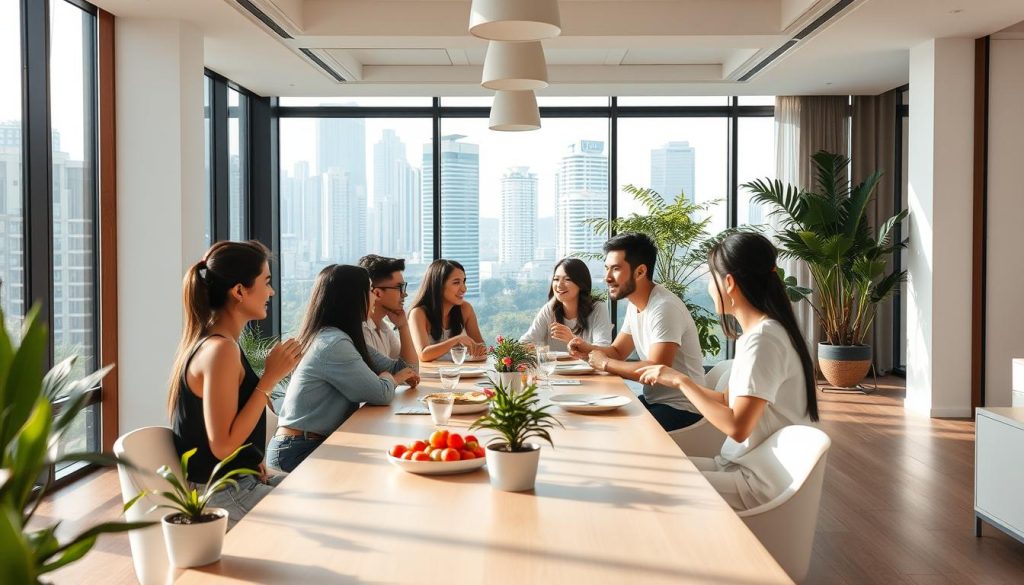
In Singapore, a city known for its vibrant culture and innovation, a new trend is emerging. Co-living spaces are becoming more popular, and for good reason.
The cost of living in Singapore is rising. Affordable housing is now in high demand. Co-living offers a unique solution, providing a place to live and a sense of community.
Our community living spaces are designed to foster meaningful relationships. They help residents feel a sense of belonging.
We’re excited to share the benefits of co-living with you. To learn more about our community and how you can be a part of it, feel free to contact us on WhatsApp at +6594341391.
Singapore is getting more crowded, and co-living is seen as a good answer to the housing problem. The housing prices are high, but co-living offers a chance for affordable living and a sense of community.
Singapore has always focused on public housing. The Housing and Development Board (HDB) has been key in making homes affordable. But, the cost of living and housing has gone up, making people look for other options.
The way housing has changed in Singapore is due to many things. These include economic growth, urban planning, and changes in the population. As the population gets more diverse, there’s a need for housing that can adapt.
Co-living offers affordable housing by sharing living spaces. It’s great for young professionals and expats who want flexibility and to meet new people.
Co-living spaces in Singapore are designed to bring people together. They have common areas where residents can meet and interact. This helps build a community and offers chances for professional networking.
| Features | Traditional Housing | Co-Living Spaces |
|---|---|---|
| Affordability | High costs | Shared costs, more affordable |
| Community | Limited interaction | Fosters community and networking |
| Flexibility | Long-term leases | Flexible lease terms |
To learn more about how co-living spaces are changing housing in Singapore, visit LivHola’s article on co-living space design.
Exploring co-living in Singapore, we see its social impact framework is key. Co-living spaces aim to build a community among residents. This can greatly improve their well-being.
Social impact in housing talks about how a place affects its residents and the community. In co-living, it’s about making friends, feeling at home, and sharing resources. “Co-living arrangements have the power to change how we see community and social interaction.”
To gauge co-living’s social impact, we need to measure its community effects. This involves both numbers and stories.
Numbers tell us about community events, how well residents talk to each other, and feedback. For example, a co-living space might show high event participation.
Stories from residents give us deeper insights. We learn through interviews, focus groups, and surveys.
“The sense of community here is palpable; it’s like living with friends.”

Co-living spaces are changing how we think about community in cities. They create spaces where people can interact and feel a sense of belonging. This is changing how we live and connect with each other.
The journey from strangers to friends is key in co-living. Through events and activities, people start to connect and form lasting bonds. Community building is central to co-living, creating a supportive network that makes living better.
As people join in community events, they start to feel like they belong. This turns a simple place to live into a lively community. The design of co-living spaces, focusing on shared experiences and social interaction, helps make this happen.
The design of co-living spaces is key in bringing people together. Community-centric design leads to spaces that encourage people to interact. This includes communal kitchens, lounges, and outdoor areas.
It’s also important to have private areas that respect people’s space. Co-living spaces balance shared areas with private spaces. This way, residents can relax and recharge in their own space.
In Singapore, co-living spaces are becoming lively centers for cultural exchange and diversity. They bring together people from different backgrounds. This creates a multicultural community full of experiences and views.
Singapore’s co-living spaces are cultural melting pots. People from all over the world live together here. They share traditions, ideas, and lifestyles, weaving a unique cultural tapestry.
Residents can join cultural events, share meals, or learn new languages. This multicultural living has many benefits. It builds understanding and tolerance, breaking down cultural barriers. It also makes living more vibrant and engaging.
| Benefits of Multicultural Living | Description |
|---|---|
| Cultural Exchange | Exchange of traditions, ideas, and lifestyles among residents. |
| Global Understanding | Promotes understanding and tolerance among residents from different backgrounds. |
| Diverse Living Experience | Enriches the living experience with various cultural practices and events. |
Community events are key in celebrating diversity in co-living spaces. These events, like cultural festivals and communal dinners, help residents come together. For instance, a co-living space might host a Lunar New Year celebration or a Diwali festival.

By celebrating diversity, co-living spaces in Singapore build strong community bonds. This approach makes living together more harmonious and enjoyable. It encourages cultural exchange, enriching the community.
The co-living model in Singapore offers many economic benefits. It’s a modern housing solution that brings financial advantages.
Co-living spaces are more affordable than traditional housing in Singapore. By sharing resources and costs, residents save money. A report shows co-living is cheaper than other housing options, appealing to young professionals and students.
Co-living emphasizes resource sharing, encouraging collaborative consumption. This not only cuts down on expenses but also builds a community among residents.
Co-living spaces include shared amenities like gyms, lounges, and kitchens. These are often part of the rent, saving residents from extra costs.
Residents save money by using communal resources. For example, shared laundry and kitchens mean fewer personal appliances, saving money and space.
An article on LinkedIn talks about co-living’s affordability and value. It shows co-living is a good choice for saving on housing costs.
| Economic Benefits | Co-Living | Traditional Housing |
|---|---|---|
| Affordability | High | Low |
| Resource Sharing | Yes | No |
| Shared Amenities | Included | Additional Cost |
Co-living spaces are more than just a place to live. They create environments that support our mental health. They encourage interaction and a sense of community among residents.
In cities like Singapore, urban isolation is a big problem. Co-living helps by providing shared spaces for people to connect. Shared living spaces help reduce loneliness and isolation by encouraging people to interact.
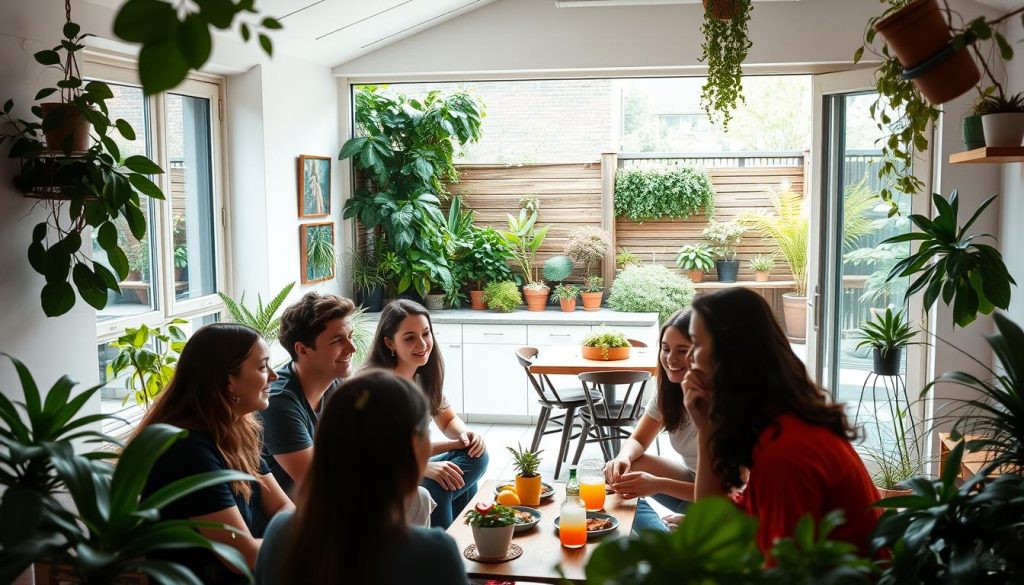
Co-living communities often become support networks where people help each other. These networks are very important when things get tough. They offer emotional support and practical help. Here’s a table showing the benefits:
| Benefits | Description |
|---|---|
| Emotional Support | Residents offer emotional support, reducing feelings of loneliness. |
| Practical Help | Community members assist with tasks, such as grocery shopping. |
| Social Connections | Regular community events foster new friendships and connections. |
Co-living spaces fight urban isolation and offer support networks. This greatly helps the mental health and well-being of their residents.
The rise of co-living in Singapore has changed the game for networking and career growth. Now, we see a community that connects more than ever before. People share knowledge, skills, and chances to advance their careers.
Co-living spaces are built for professional networking and career opportunities. Living and working together, residents find ways to collaborate and start new businesses. Many spaces host events and workshops, helping everyone grow professionally.
Many success stories come from co-living spaces. For example, an entrepreneur might team up with a developer they met at an event. This partnership can lead to a thriving startup, boosting both careers and the local economy.
“Co-living spaces have been instrumental in our journey as entrepreneurs. We’ve met some of our most valuable collaborators and partners within our co-living community.” – Emily Chen, Co-Founder of a tech startup
The table below shows the benefits of co-living for networking:
| Benefits | Description |
|---|---|
| Networking Opportunities | Regular events and workshops |
| Collaborative Environment | Shared workspaces and living areas |
| Access to Talent | Diverse community of professionals |
Singapore’s co-living model is creating a unique space for professional growth and teamwork. As this trend grows, we’ll see more innovative partnerships and career moves.
The co-living model is becoming popular in Singapore. It offers a big advantage: it helps the environment. Co-living spaces make people share things, which cuts down on waste and use.
Co-living has a big win for the planet. It lowers carbon footprint by sharing things like kitchens and laundry. This means fewer appliances and less energy use, which helps the environment.
Co-living spaces in Singapore are going green. They’re taking steps to lessen their impact on the environment. These efforts also bring people together, creating a sense of community.
Many co-living places have community gardens. Here, people can grow their own food. It’s a way to eat locally and cut down on emissions from big farms.
Living together encourages people to save energy. For example, shared lights and heaters can be used wisely. This leads to less waste and more efficiency.

Co-living in Singapore is showing a new way to live sustainably. It proves that living together can be good for both people and the planet.
Digital connectivity is changing how communities are built and interact in Singapore’s co-living spaces. Technology is key in making co-living better.
Technology leads in building communities in co-living spaces. Digital platforms help people connect, plan events, and feel part of a community. For example, many co-living places in Singapore use mobile apps to link residents, share news, and build community spirit.
Digital tools are vital for peace in co-living spaces. Smart home devices and systems manage resources well, cutting down waste and improving life. Digital platforms also let residents give feedback and ideas, making living together better.
| Digital Tool | Function | Benefit |
|---|---|---|
| Mobile Apps | Community Engagement | Fosters a sense of belonging |
| Smart Home Devices | Resource Management | Reduces waste and enhances efficiency |
| Feedback Platforms | Resident Feedback | Promotes collaborative living |
Co-living is becoming more popular, but it comes with its own set of challenges. It offers benefits like community and affordability. Yet, it also has difficulties that need to be solved for a peaceful living space.
Privacy is a big concern in co-living. People need their own space but also enjoy the community. To solve this, co-living places are designed with both private and shared areas.
For example, some have private bedrooms with bathrooms. But they also have shared kitchens and lounges.
Dealing with conflicts is key in co-living. People from different backgrounds living together can lead to disagreements. It’s important to have clear rules and ways to solve problems.
Guidelines help everyone know what’s expected. They cover things like noise, cleanliness, and how to use shared spaces. This helps create a respectful community.
When conflicts happen, mediation helps find solutions. Trained mediators help people talk and find a way to agree.
| Challenge | Solution |
|---|---|
| Privacy Concerns | Designing spaces with private quarters |
| Conflict Resolution | Establishing community guidelines and mediation processes |
Co-living in Singapore is more than a trend; it’s a way to build stronger communities. It offers affordable, sustainable living with a focus on social interaction. This makes co-living a growing choice in Singapore.
The future of co-living is promising. Expect more community-focused designs, digital connections, and green living. If you want to join this innovative housing solution, learn more about our co-living spaces. See how they can improve your life in Singapore.
Want to know more? Contact us on WhatsApp at +6594341391. Discover the perks of co-living yourself.
Co-living is a new way to live that focuses on community. It’s different from traditional housing in Singapore. Many people choose co-living because it’s affordable and offers a sense of community.
Our co-living spaces are built to help people connect. They have designs and events that encourage interaction. This helps fight loneliness and builds a supportive community.
Co-living is a budget-friendly option in Singapore’s pricey housing market. It offers shared amenities that lower living costs. This makes living more affordable for residents.
Our co-living spaces celebrate different cultures. They host events that encourage cultural exchange. This helps create a more inclusive and harmonious community.
Technology is key in co-living, making it better for everyone. It helps build a connected and convenient living space. We use tech to enhance the co-living experience.
We balance community and privacy in co-living. Our rules and mediation help solve any problems. This ensures a peaceful living environment.
Co-living is good for the planet. It uses shared resources, which cuts down on waste. We focus on green living and saving energy in our communities.
Yes, co-living spaces are great for networking and starting businesses. Many partnerships and businesses have started here. It’s a place for career growth and innovation.
We’d love to tell you more about our co-living spaces. You can reach out to us on WhatsApp. We’ll share more about our community and how to join.
Nestled in the bustling Singapore, Livhola is a co-living space crafted for those who seek comfort, convenience, and community.
© 2024 Livehola. All Rights Reserved