
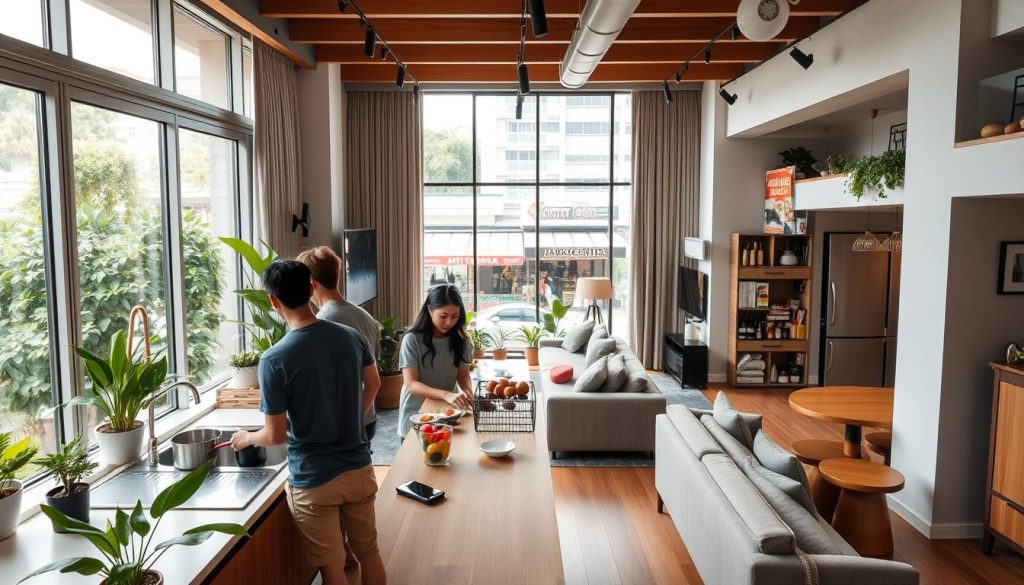
In Singapore, a big change is happening in how people live. Co-living spaces are becoming more popular. They mix community living with convenience, making them appealing to many.
These co-living spaces are close to many food options. Imagine trying different foods without traveling far. Let’s dive into the perks of food-centric co-living and see Singapore’s food scene.
For special deals and to see a place, email us at admin@livhola.com. We’re excited to help you find your perfect home.
Co-living is becoming popular in Singapore. It combines community and convenience. These spaces offer a home-like feel with added services, attracting expats and young professionals.
Co-living in Singapore stands out for its focus on community and amenities. Recent trends show it creates a sense of belonging. This is a big draw in busy Singapore.
Expats and young professionals love co-living for its ease, flexibility, and social perks. Here’s how co-living beats traditional housing:
| Features | Traditional Housing | Co-Living Spaces |
|---|---|---|
| Flexibility | Long-term leases | Short-term to long-term leases |
| Amenities | Limited amenities | Fully equipped kitchens, coworking spaces, social events |
| Community | Limited social interaction | Regular events, communal living |
Experts say co-living is changing how we live and work. It offers a sustainable, connected lifestyle.
Singapore is famous for its lively food culture, attracting food enthusiasts from everywhere. The city’s food scene is rich and varied, thanks to influences from Chinese, Malay, Indian, and Eurasian cultures. This mix is seen in the many dishes available, from street food to fancy meals.
At the heart of Singapore’s food culture are its hawker centers. These outdoor food courts offer a variety of local dishes at good prices. They are more than just places to eat; they are community spots where people come together to enjoy food and each other’s company.
The food variety at hawker centers is amazing. You can find dishes like chili crab, Hainanese chicken rice, and char kway teow.
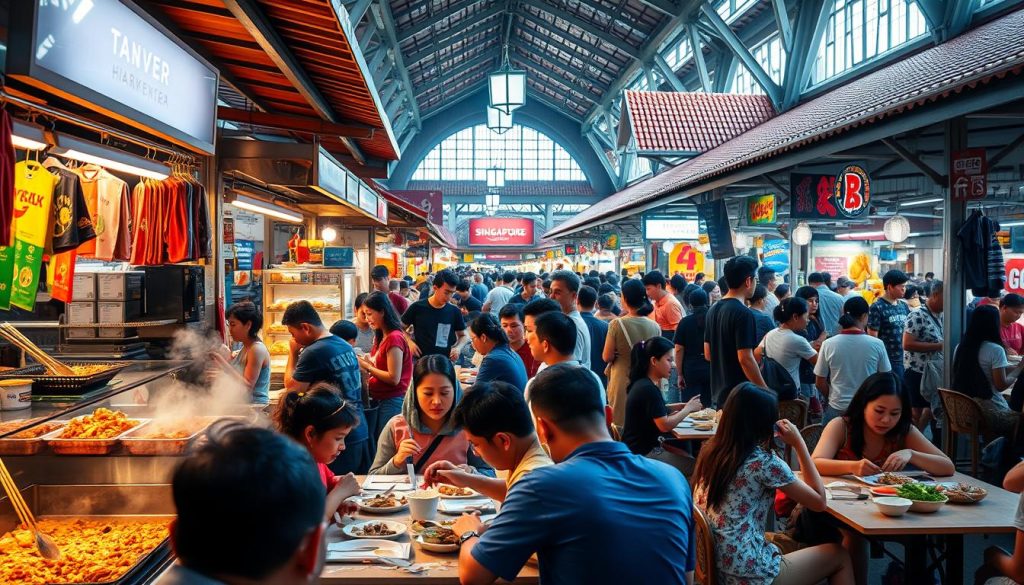
Food is deeply connected to Singaporean identity, showing the country’s diverse heritage. Meals are a chance to bond with family and friends. Food also plays a big role in cultural celebrations and traditions.
The role of food in Singaporean culture is clear. It brings people together, creating a sense of community and belonging.
| Dish | Cultural Influence | Popular Location |
|---|---|---|
| Chili Crab | Chinese | Clarke Quay |
| Hainanese Chicken Rice | Chinese | Tiong Bahru Market |
| Laksa | Peranakan | Katong |
Co-living in Singapore is more than just shared living spaces. It’s also about the rich food culture around you. At Livhola, we think the best Singapore lifestyle combines both worlds perfectly.
Our co-living spaces are made for busy professionals. You can find food anytime, with many cuisines to try. This is great in Singapore, where time is precious. Learn more about our spaces and community at https://livhola.com/co-living-in-singapore-fostering-friendships-and-community/.
Co-living spaces are all about social dining experiences. They bring people together for meals. This builds community and creates memories. Our spaces are set up to help you make friends.
Living in Singapore can be pricey, but co-living is a cost-effective housing option. Sharing resources and amenities means a better life at a lower cost. Here’s a cost comparison:
| Category | Co-Living | Traditional Housing |
|---|---|---|
| Rental Price | $1,500/month | $2,500/month |
| Utilities | Included | $200/month |
| Food Options | Diverse, nearby | Limited, self-cooking |
Imagine living where your next meal is just a short walk away. Welcome to Livhola’s co-living spaces in Singapore’s food hotspots. Our spaces offer a unique living experience. They combine Singapore’s food scene with comfortable and convenient living.
Our Livhola co-living spaces are in Singapore’s most lively food districts. You’re always close to your next food adventure. We provide premium amenities for your needs, like fast internet and top-notch fitness centers.
Here’s what you can expect from our co-living spaces:
| Location | Amenities | Services |
|---|---|---|
| Tiong Bahru | Fitness center, Co-working space | Housekeeping, Laundry |
| Katong | Swimming pool, BBQ area | Food delivery integration, Community events |
| Tanjong Pagar | Gym, Lounge area | Concierge service, Regular community activities |

At Livhola, community is key. Our community features and shared spaces help people connect and make memories. From communal kitchens to shared lounges, our spaces are made for togetherness.
Join us at Livhola and dive into Singapore’s food culture. Explore our co-living spaces today. Discover a new way of living that blends food, community, and comfort.
Some neighborhoods in Singapore are perfect for food lovers. The city offers a wide range of cuisines. Living in these areas can make your dining experiences even better. Here are the top spots for food-centric co-living in Singapore.
Tiong Bahru is a charming area with a mix of hipster cafes and traditional hawker centers. You can find everything from artisan coffee to laksa and char kway teow. It’s a laid-back neighborhood that attracts young professionals and creatives.
Katong is known for its Peranakan cuisine, a mix of Chinese, Malay, and European flavors. You can try kaya toast and laksa at local spots. The area’s rich culture is seen in its architecture and street art, making it a unique place to live.
Tanjong Pagar is a busy business district with great food options. From fancy restaurants to casual spots, there’s something for everyone. It’s famous for its Japanese and Korean cuisine, perfect for food enthusiasts.
Geylang offers real local flavors and a lively nightlife. You can find everything from Hainanese chicken rice to BBQ pork at hawker centers. It’s also great for those who like to eat late at night.
For more insights on co-living spaces in Singapore, check out this article on visiting co-living spaces and comparing them to traditional HDB flats.
Living in a co-living space near Singapore’s food hotspots turns daily life into a food adventure. We get to enjoy the rich flavors and vibrant culture of Singapore right at our doorstep.
Our day starts with traditional Singaporean breakfasts. We enjoy kopi and kaya toast at nearby hawker centers. This ritual not only delights our taste buds but also lets us meet locals and fellow residents.
Lunchtime is a time for adventure, with many options at our local hawker centers. We try everything from char kway teow to laksa. It’s a chance to explore Singapore’s diverse culinary world.

In the evenings, we gather with our housemates for social dining. We might cook together or order from nearby restaurants. These moments build a sense of community and friendship, making our co-living lifestyle richer.
These daily experiences show how living near food hotspots makes our lives better. We enjoy food adventures and make meaningful connections.
In the heart of Singapore, food is more than just a meal; it’s a way to build community. At our co-living spaces, we focus on how food brings people together. We celebrate the diversity of Singapore’s culinary scene through various initiatives.
Our co-living spaces host communal cooking events. Residents share their favorite recipes and cooking techniques. These events are about creating a sense of belonging.
As residents gather around the stove, they share stories and laughter. This strengthens bonds within the community. “Food has a way of breaking down barriers and bringing people together.” Our communal kitchens make it easy for residents to cook together and share meals.
We also organize neighborhood food exploration tours. These tours take residents on a culinary journey through Singapore’s diverse neighborhoods. From Tiong Bahru’s hipster cafes to Katong’s Peranakan cuisine, residents discover new flavors and hidden gems.
As residents explore together, they learn about Singapore’s rich cultural heritage. These tours are a great way to explore the local food scene and make new friends who share similar interests.
By combining food, culture, and community, we create a unique living experience. Our co-living spaces are designed to nurture a sense of community, and food plays a central role in this endeavor.
When looking at housing options in Singapore, it’s key to know the cost differences between co-living and traditional housing. Co-living spaces often have a lower cost advantage.
Co-living spaces in Singapore usually include things like utilities, Wi-Fi, and shared facilities. This can lower your monthly bills. For example, a room in Tiong Bahru might cost $1,200 to $1,800 a month. This price includes utilities and access to gyms and lounges.
In contrast, traditional housing in the same area might cost $1,500 to $2,500 for a similar room. But, it might not include all the extras you get with co-living.
Key districts and their average rental prices are as follows:
Co-living spaces also save you money on food and shared resources. You can eat at hawker centers and food courts for just $3-$5. This is much cheaper than eating out elsewhere.
“The communal kitchen and dining areas in co-living spaces foster a culture of sharing meals and cooking together, further reducing food expenses,” says a resident. This way of living not only saves money but also makes living together more enjoyable.
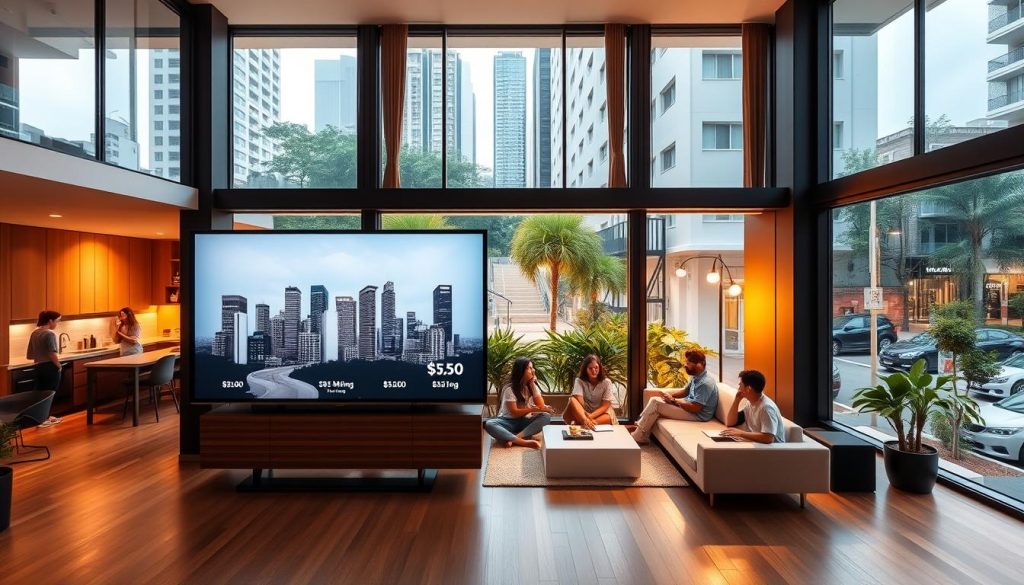
In Singapore’s lively food scene, finding the right co-living space is key. It’s all about location, amenities, and community. These factors make your living experience both comfy and fun.
The spot of your co-living space matters a lot. It should be close to great food spots. Being near hawker centers or food streets is ideal. Also, being close to MRT stations makes getting around easy.
Good amenities make a co-living space great. Look for things like shared kitchens, dining areas, and lounges. These help build a community feel.
| Amenity | Description | Importance Level |
|---|---|---|
| Communal Kitchen | Shared cooking space for residents | High |
| Dining Area | Space for communal dining experiences | Medium |
| Lounge | Relaxation area for residents | High |
It’s important to know about the community and rules. Look for places that host events and have clear rules.
“A great co-living space is not just about the physical amenities, but also about the community that comes with it.”
Singapore is a great place for those who love food and want to live in a unique way. At Livhola, we offer a co-living lifestyle. It combines modern living with Singapore’s rich food culture.
Imagine starting your day with the smell of coffee. Then, go to hawker centers for breakfast. In the evening, enjoy meals with others who love food. Our spaces in Singapore’s food areas are perfect for comfort, community, and food adventures.
Choosing Livhola means you get a cost-effective and convenient home. Plus, you join a community that loves food and culture. To see our spaces and offers, email us at admin@livhola.com. Start your journey in Singapore’s food paradise and make new friends and memories.
Co-living means sharing a home with others. It often includes shared spaces and activities. In Singapore, places like Livhola offer a special experience. They are close to great food and have top-notch amenities.
Singapore’s food scene is a mix of many cuisines. It focuses on hawker centers and street food. Our co-living spots near these places let you dive into the local food scene.
Spaces like Livhola build community through shared activities. Events like communal cooking and food tours help residents connect. This builds strong relationships among them.
Living near food spots is convenient for busy people. It offers social dining and saves money. Our spaces give you easy access to many food options.
Look at location, amenities, and community fit. Our guide helps with these. It covers food access, amenities, and community rules.
Top spots include Tiong Bahru, Katong, Tanjong Pagar, and Geylang. Each offers a unique food experience, from trendy cafes to traditional hawker centers.
Co-living, like Livhola, is priced well and includes many amenities. It’s a cost-effective choice. Plus, the savings from food access and shared resources add up.
Our spaces have shared kitchens, lounges, and gyms. We also host events to help residents feel part of a community.
Yes, email us at admin@livhola.com to learn more. We’re ready to answer your questions and help you find your perfect co-living spot in Singapore.
Nestled in the bustling Singapore, Livhola is a co-living space crafted for those who seek comfort, convenience, and community.
© 2024 Livehola. All Rights Reserved