
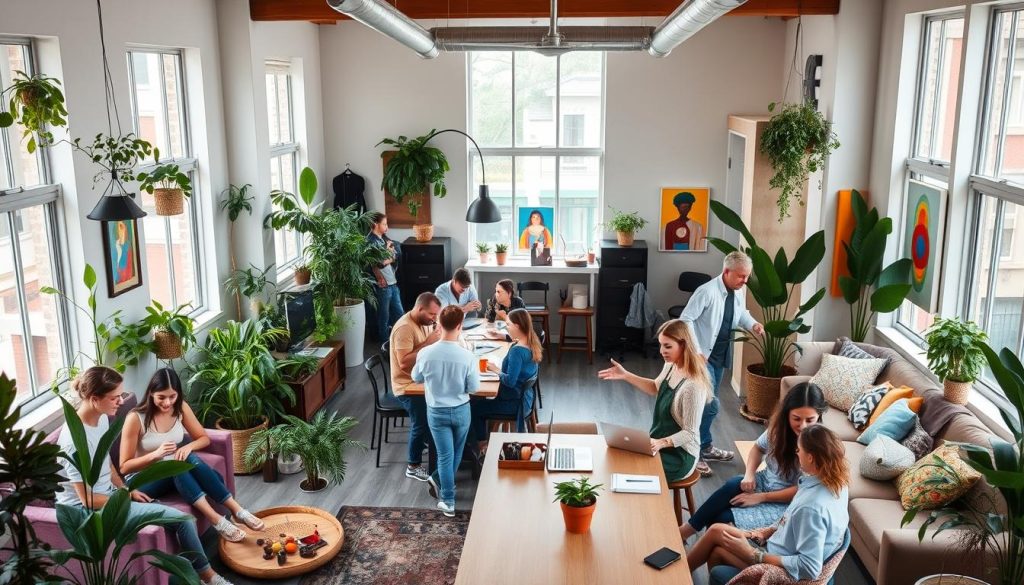
In today’s fast world, city skylines keep getting higher, and making friends feels hard. Co-living gives us a new way to live in cities. It’s not just a place to sleep; it’s about living together and keeping our own space.
In cities like Singapore, co-living helps us make friends and feel part of a community. It shows us that living together can make our lives richer. Let’s see how co-living changes our lives and makes cities feel more welcoming.
Co-living is a new way to live, blending community and personal space. It’s a fresh take on housing in cities, where affordable homes are scarce. Exploring co-living helps us see why it’s becoming popular.
Co-living mixes shared spaces with private bedrooms. It’s about building a community and sharing costs. This setup is flexible, appealing to many, including young professionals and digital nomads.
Co-living started in cities to tackle high housing costs. It’s more than a solution; it’s a lifestyle choice. It encourages social interaction and is more eco-friendly than traditional homes.
| Feature | Co-Living Space | Traditional Apartment |
|---|---|---|
| Lease Flexibility | Short-term and long-term options | Fixed lease often required |
| Shared Costs | Utilities included in rent | Separate utility bills |
| Community Activities | Regular social events | Limited or no organized events |
| Design | Encourages interaction | Focus on privacy |
| Fully Furnished | Yes | Typically no |
Co-living offers many perks for city folks. It tackles high costs and loneliness. We get to enjoy co living benefits that make our lives better in shared spaces.
Co-living focuses on building community. In cities, it’s easy to feel alone. But co-living helps us make friends and feel supported.
By sharing spaces, we feel like we belong. This is key for our happiness. Places with common areas help us connect through activities and shared moments.
Sharing costs is a big plus of co-living. Many places include things like utilities and Wi-Fi in the rent. This makes budgeting easier.
For example, some spots cost under £1,500 a month. They offer cool perks like cinema rooms and workspaces. This saves money and helps us live greener.
Co-living is super flexible. Lease terms are short, so we can change our living situation easily. Plus, places are in great locations, saving us time.
They also have amenities we need today. This setup helps us work and play well, improving our life quality.
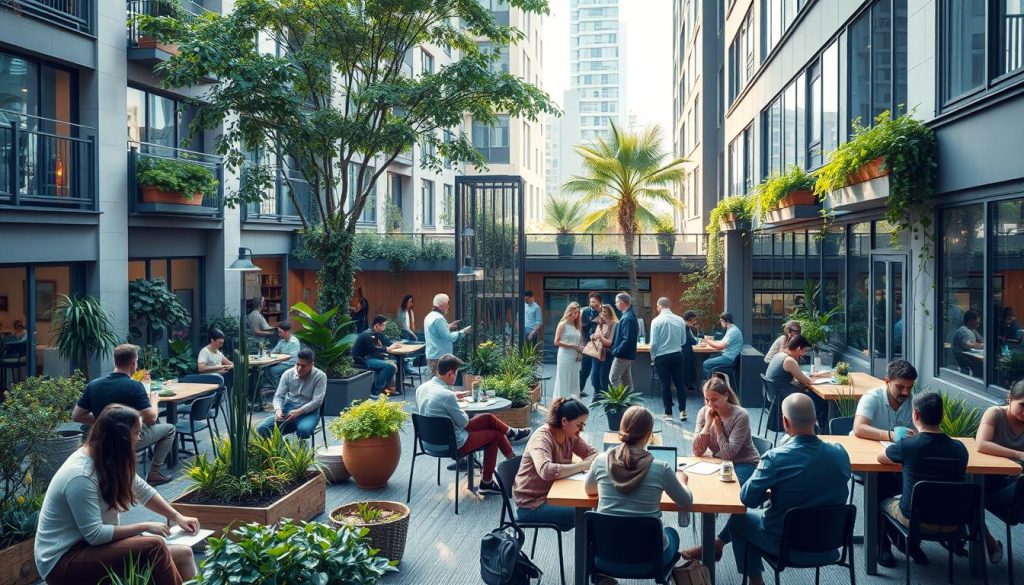
Want to know more about co-living changing city living? Check out different living options here.
The co-living lifestyle appeals to many who want connection, affordability, and flexibility. It’s perfect for those who enjoy living in a community. This lifestyle supports different lifestyles in unique ways.
Young professionals in cities love co-living. It’s great for networking and saving money. Co-living spaces have shared areas like kitchens and lounges, promoting friendship and teamwork.
Artists and creatives find co-living inspiring. It’s a place where ideas flow and resources are shared. With studios and workshops, it’s ideal for growing your craft. It helps avoid the loneliness of solo work.
Digital nomads enjoy co-living’s flexibility. It offers short leases and fully furnished places, making travel easy. Co-living spaces have strong internet and work areas, helping remote workers stay productive and connected.
Modern collective housing has unique designs and features. These go beyond just being affordable. They create a community feel and offer a lifestyle that city dwellers love.
Common areas are key in making a space welcoming. They often have:
These areas help people connect and build friendships, making co-living special.
Co-living spaces also have private areas for each person. These include:
This mix of shared and private areas is what makes co-living appealing.
Work and play spaces are important. Co-living offers:
| Amenity | Description |
|---|---|
| High-Speed Internet | Fast internet for work and fun, great for digital nomads. |
| Cleaning Services | Cleaning is included, making life easier. |
| Community Events | Events to bring people together. |
These features improve life and save on bills. They show how co-living combines comfort, community, and modern needs.

In Singapore, co-living spaces are becoming a big deal. They help solve the problem of high rents and changing lifestyles. Young professionals are drawn to these shared homes because they’re affordable and flexible.
Singapore’s fast-paced city life is perfect for co-living. Most people live in tall buildings, making it easy to share spaces. With high rents, many turn to co-living for a sense of community.
People want to pay less for rent, which is why co-living is popular. Rents in co-living spaces are lower, from SGD 800 to SGD 2,500. This is a big savings compared to traditional rents over SGD 3,000. Co-living offers flexible stays, from six days to three months, perfect for those who like to move around.
Singapore’s diverse culture makes co-living more appealing. It’s not just about saving money; it’s about building a community. About 70% of residents enjoy the events and friendships they make. This shows how Singapore values community and support in the city’s fast pace.
| Feature | Co-Living Spaces | Traditional Rentals |
|---|---|---|
| Typical Rent | SGD 800 – SGD 2,500 | Exceeds SGD 3,000 |
| Lease Flexibility | 6 days – 3 months | Minimum 6 months |
| Monthly Utilities Included | Yes | Varies |
| Community Engagement | High (70% satisfaction) | Lower |
| Demographic | Millennials & Expatriates | General Population |
Co-living in Singapore is changing how we live. It combines affordability with community. As we move forward, co-living will continue to shape our lives, bringing us closer together in the city.
Co-living is becoming more popular, but it comes with its own set of challenges. Living together offers many benefits, but it also brings up issues like privacy, managing shared spaces, and solving conflicts. These problems highlight the need for a collaborative living philosophy, which focuses on understanding and adapting to each other.
Privacy is a big issue in communal living. Studies show that about 55% of co-living places face privacy problems. This can make people uncomfortable and stressed if they value their alone time. It’s key to set boundaries so everyone feels safe and respected in the shared space.
Shared areas are a core part of co-living, but they can be tricky to manage. Keeping these spaces clean and organized requires teamwork and clear communication. It’s important to have rules for common areas like kitchens and lounges. This helps avoid confusion and keeps the living environment peaceful and collaborative.
Conflicts are bound to happen when people live together, due to different lifestyles and habits. Learning how to solve these problems is vital for a good living experience. We need to practice talking openly, being empathetic, and listening well. Activities that build community can also help us develop these skills, making our living situation better for everyone.
| Challenge | Description | Impact on Residents |
|---|---|---|
| Privacy Concerns | Issues related to personal space and autonomy. | Can lead to discomfort and stress. |
| Managing Shared Spaces | Balancing cleanliness and organization in common areas. | Misunderstandings can disrupt harmony. |
| Conflict Resolution | Navigating differing lifestyles and habits. | Impacts overall community dynamics. |
To thrive in a co-living environment, we must focus on effective communication and respect for each other’s privacy. Embracing the co living meaning helps us understand that shared accommodation lifestyle requires collaboration and mutual understanding. When we unite our diverse experiences, the community becomes more vibrant.
Establishing clear boundaries fosters an atmosphere of respect and harmony within our shared spaces. Each of us has unique preferences regarding personal space and shared responsibilities. By defining these limits, we can enhance the living experience and ensure peaceful coexistence. Keeping open lines of communication allows us to address any concerns that may arise swiftly and thoughtfully.
Active communication constitutes the foundation of a positive shared accommodation lifestyle. Regular check-ins among roommates make it easier for us to voice our needs and expectations, paving the way for a more engaging co-living experience. Sharing ideas and discussing communal matters not only strengthens our relationships but also builds a community where everyone feels valued.
Cultivating a spirit of teamwork and collaboration is essential for creating a welcoming environment in our co-living spaces. We can organize community events and activities, encouraging interaction and connection among residents. A diverse range of talents and backgrounds contributes to a lively atmosphere, where every member can feel at home while enjoying the benefits of a shared living arrangement.
| Aspect | Co-Living Spaces | Traditional Rentals |
|---|---|---|
| Membership Fees | Includes essential amenities | Additional costs for services apply |
| Common Areas | Fosters community connections | Typically limited to private space |
| Furnishings | Fully furnished rooms | Often requires personal furniture |
| Flexible Rentals | No long-term contracts | Usually requires annual leases |
| Housekeeping Services | Included in fees | Usually not included |
Finding the perfect co-living space starts with knowing what’s out there. In Singapore, new shared housing options have appeared. These meet the needs of those looking for modern living. Digital platforms make finding these options easier, opening up many possibilities.
Singapore now has many co-living spaces, thanks to urban growth and a need for affordable living. Doing thorough research helps us compare what’s available. We can look at amenities, locations, and prices. Reading reviews and checking websites gives us insights into these communities.
Choose places that fit our lifestyle and daily needs.
Virtual tours have changed how we search for places. Many modern housing options offer detailed online tours. These let us see living spaces, like kitchens and gyms, without traveling far. When we’re ready, visiting in person can show us the community’s vibe.
A personal tour can also show us the social atmosphere. It helps us see if the place feels right for us.
When choosing, ask important questions during visits or online chats. Ask about:
Getting these details right away can prevent problems later. It sets the stage for a great co-living experience.
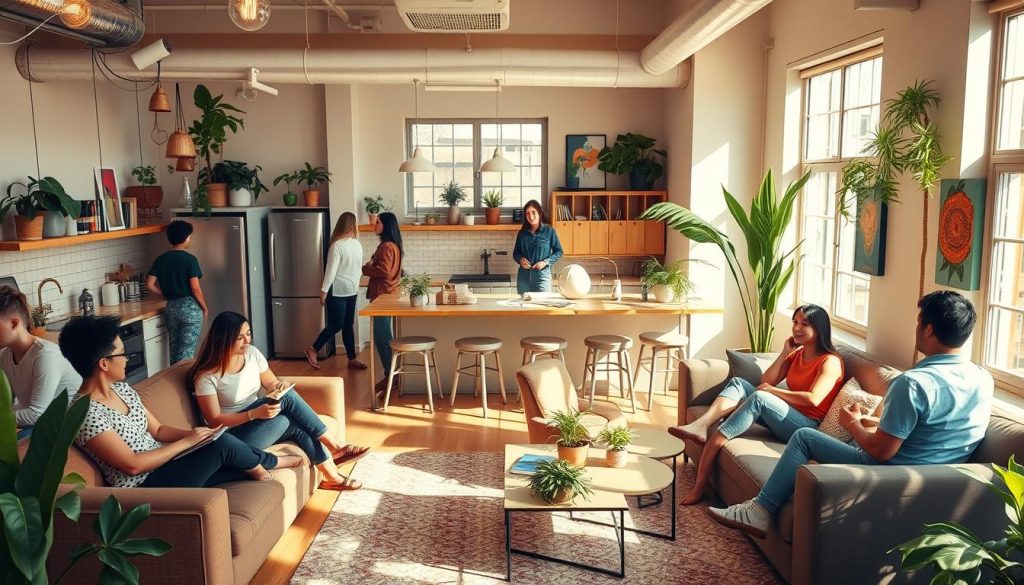
The future of co-living is looking bright. With housing costs on the rise, new ideas like shared housing are gaining traction. More co-living spaces are popping up, designed for different lifestyles. They offer both affordability and a sense of community.
Keeping up with trends will help us stay ahead in this changing world.
Several trends are set to shape the co-living scene:
Eco-friendly living is becoming a big deal in co-living. Many are looking for shared housing that cares about the planet.
Here’s what we can look forward to:
Small shared gardens and low-maintenance indoor planting work better when watering does not depend on one resident. A practical self-watering planter guide can help residents and property teams choose containers for balconies, common lounges, window boxes and compact shared spaces.
In conclusion, the co-living sector is ready for growth. It’s all about adapting to new lifestyles and values. This change brings great chances for building community and being eco-friendly in our cities.
Urban living is changing, and many of us want more. Co-living offers a new way to live that’s engaging and fulfilling. It’s about living together and saving money, which is perfect for today’s fast world.
Co-living changes how we see our cities and ourselves. It lets us meet people who think like us, making us feel part of something bigger. In Singapore, 85% of co-living guests are under 40, showing a lively community of young professionals and artists.
This lifestyle helps us balance work and fun. We get flexible leases that fit our busy lives without the hassle of finding roommates. Amenities like shared utilities make our lives easier, giving us more time for what’s important — like making friends and having great experiences.

| Aspect | Co-Living | Traditional Rental |
|---|---|---|
| Rental Cost | Starting around S$1,000 in central locations | Variable, often higher for similar locations |
| Flexibility | Short-term and flexible leases | Typically long-term commitments |
| Community Events | 20+ events hosted every month | Rarely organized |
| Furnishings | Fully furnished spaces | May require personal furniture purchase |
| Occupancy Rate | About 90% in Singapore | Varies widely |
Co-living brings a fresh twist to city living. It changes how we live and connect, helping us thrive in our cities’ future.
Communal living brings a lively vibe, but a clean space is key. A clean environment helps people connect and enjoy their living space. Our cleaning services are made for co-living, keeping every area clean and inviting. We tailor our services to fit the needs of communal living, making it a place of harmony for everyone.
We’re thrilled to share our latest deals on cleaning services. Whether you’re moving in or planning an event, our team is ready to clean. Our rates are competitive, and our packages are customizable, so your space stays clean and welcoming without costing too much.
Want to see how our services can help your community? Contact us for a free quote that fits your cleaning needs. We’ll work with you to create a cleaning plan that’s effective and efficient for your space. Cleanliness is key to a great living environment, and we’re here to help.
Staying in touch is important, even more so in communal living. You can reach us easily on WhatsApp at +65 9434 1391. We’re ready to answer your questions and show you how our cleaning services can improve your living space. Let’s make our homes cleaner and more vibrant together!
Co-living is a new way to live where people share spaces but have their own bedrooms. It creates a community feel and encourages working together.
Co-living helps people connect and feel part of a community. It also makes living cheaper by sharing things. Plus, it offers flexible living options.
It’s great for many people. Young professionals, artists, and digital nomads all find it appealing. They like the networking, creativity, and work flexibility it offers.
These spaces are made to be functional and community-focused. They have private rooms and bathrooms. There are also shared areas like kitchens and lounges for everyone to enjoy.
In Singapore, it’s popular because of high housing costs. People want affordable living options. The culture also values community, making shared housing more accepted.
Some issues include privacy and managing shared spaces. Conflicts can also happen. It’s key to talk things through and set clear rules.
Success in co-living comes from respecting each other’s space and working together. Open communication and mutual respect are essential.
Look into different options and use virtual tours to explore. Ask about lease terms, community, and amenities. This helps you find the right fit.
Look out for more focus on green living and tech integration. These changes aim to make co-living better for the planet and our connections.
Co-living helps us feel connected in a world that often feels divided. It allows us to build strong relationships and find purpose in cities.
Nestled in the bustling Singapore, Livhola is a co-living space crafted for those who seek comfort, convenience, and community.
© 2024 Livehola. All Rights Reserved