
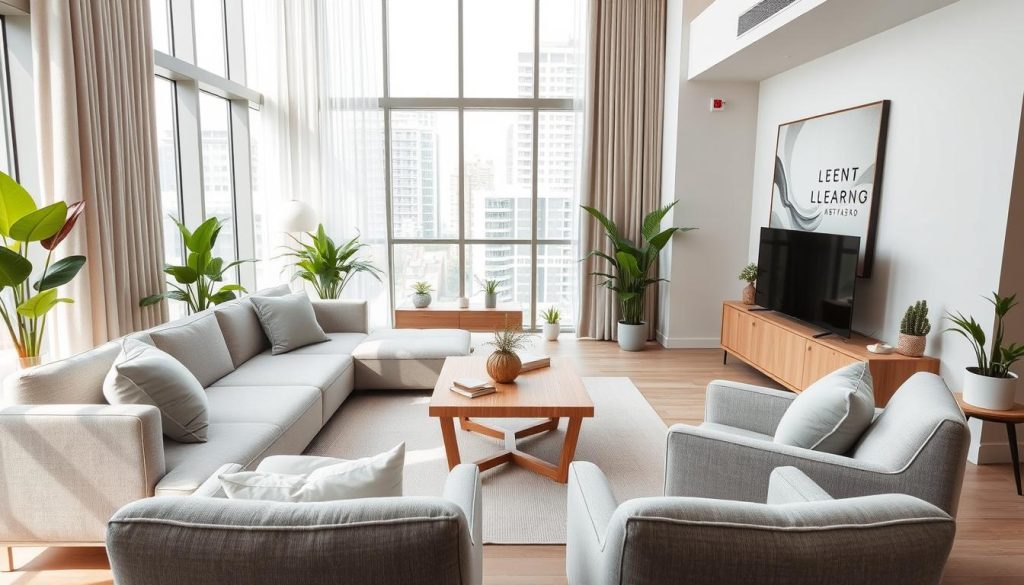
Did you know the average monthly rent for a single bedroom in Singapore’s co-living spaces is SGD$1,700 to SGD$1,900? With living costs soaring, many are choosing co-living as a budget-friendly option. This trend has led to a creative explosion in co living room design.
We’re now focusing on making our shared spaces both functional and welcoming. Let’s explore how to turn our co living rooms into lively, inviting spots. We’ll share ideas that make our living areas vibrant and cozy.
Co-living spaces in Singapore are changing how we live together. They offer affordable housing and strong community ties. These spaces mix private bedrooms with shared areas, creating a unique lifestyle.
As we dive into co-living, we find more options and facilities. They meet our changing needs, making co-living a popular choice.
Urban living is evolving, and co-living is at the forefront. Singapore has over 9,000 co-living rooms, managed by about 20 operators. Companies like Hmlet cater to expats and young locals with shared spaces.
Co-living offers flexible leases, appealing to those unsure about long-term stays. It’s not just about shared spaces; it’s about building connections.
Co-living brings many benefits for today’s lifestyles. It’s cheaper than traditional apartments and includes services like utilities and Wi-Fi. This setup makes life convenient and social.
Residents join community events, fighting loneliness. They also enjoy amenities like gyms and shared areas. This improves our work-life balance and well-being.
In the world of modern co living, design matters a lot. A good co living room design makes our space look great and work well. It helps us use our space wisely and brings people together.
Open floor plans are key in co living room decoration. They make our spaces feel open and welcoming. Without many walls, we can easily talk and hang out together.
This design choice helps us connect and feel like a community. It’s perfect for relaxing or meeting new people.
Using furniture that does more than one thing is essential. Sofas that turn into beds or tables that work as desks save space. This kind of furniture makes our living areas more useful and stylish.
Choosing versatile furniture lets us change our space for different activities. Whether it’s a movie night or a workday, our furniture adapts. For more ideas on co living room design, check out this resource.
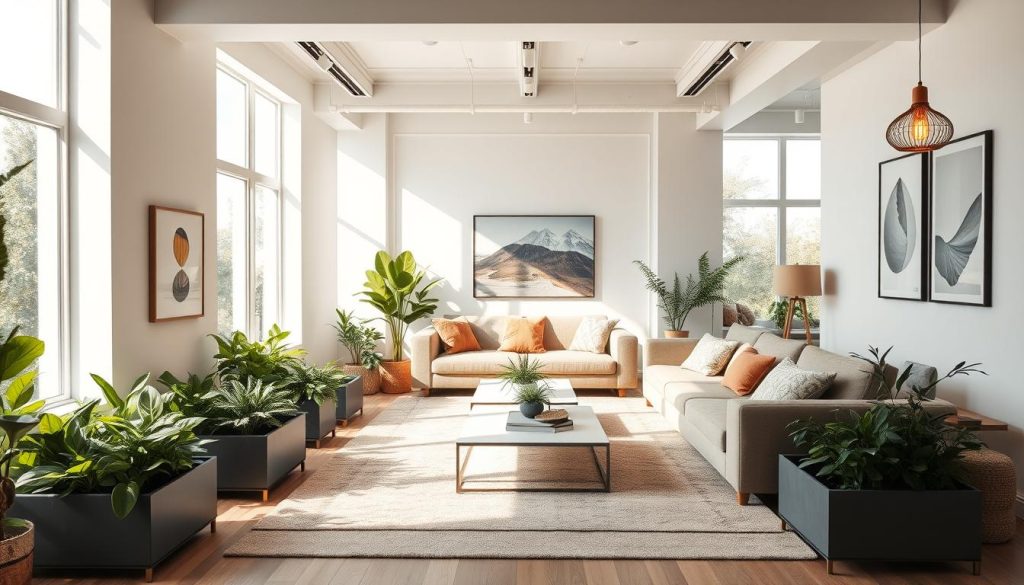
In our co living room design, color is key to creating a welcoming space. The right colors reflect our style and set the mood. They make our shared space lively, perfect for our daily interactions.
Neutral colors like beige, gray, and soft pastels are calming. They make our space feel peaceful and open up small areas. This calm atmosphere is great for unwinding after a long day.
Designers suggest using neutral furniture. It fits well with the decor and adds to the calmness of these colors.
Vibrant colors bring energy and personality to our spaces. Bold decor like cerulean blue cushions or lively artwork shows off our unique styles. The 60-30-10 color rule helps keep things balanced.
For example, coral-orange and aqua can brighten up a room. They add a special touch while keeping things harmonious. This way, we can express ourselves while sharing a common space.
Lighting is key in co living room design, shaping mood and function. We should use natural light to create a lively atmosphere. Big windows and mirrors help bring sunlight inside, making our spaces feel connected to the outdoors.
Choosing light, airy window treatments balances visibility and privacy. This makes our living rooms feel welcoming and open.
Natural light changes how we feel in shared spaces. It adds warmth and lifts our spirits. Mirrors can bounce sunlight, making the room brighter.
Clear windows let in high-quality daylight, improving our co living room’s look. Adding plants connects us to nature and boosts our mood.
A layered lighting strategy is essential for a balanced feel. It includes ambient, task, and accent lighting. Ambient lighting provides overall light, while chandeliers and pendants add elegance.
Dimmable wall lights offer flexibility for different moods. They’re perfect for family gatherings or quiet nights.
Different light sources, like floor lamps, help us customize the space. Versatile styles, including table lamps and wall sconces, effectively light specific areas. This makes our living room more inviting.
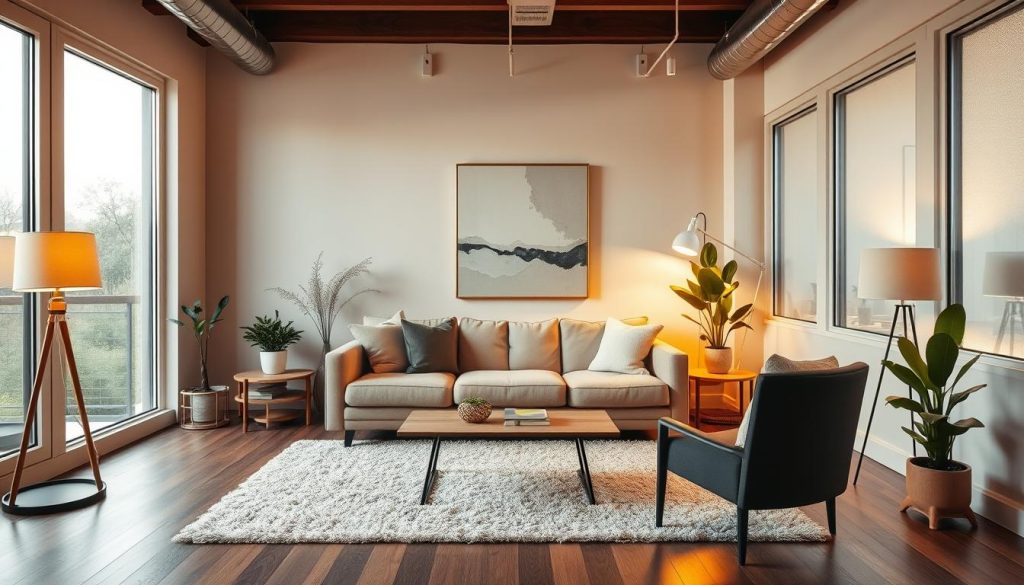
Mixing materials in lighting adds interest and makes the space unique. Accent lighting highlights architectural details, adding to the decor and warmth. Finding the right balance is key for a functional, inviting living room.
Exploring new ways to enhance our co-living spaces is exciting. For more ideas, check out this resource on modern co living interior trends.
In Singapore, making different zones in open living areas boosts both function and comfort. By using smart shared space design, we can set up our space for work, rest, and socializing. This way, our homes become places that meet our many needs, turning them into modern shared living rooms.
Setting up clear zones for different activities makes our living spaces more organized and welcoming. Zones help us manage our daily tasks smoothly. For example, using different colors can mark off areas. A deep green wall next to soft white can show where the busy area ends and the quiet workspace begins.
This use of color and design makes our homes feel bigger and more unified. It’s a way to make our spaces more enjoyable and functional.
Rugs and furniture are key in designing co-living areas. Area rugs help define zones, showing where activities happen. Using strong materials like oak or textured carpets makes these zones clear.
Big furniture pieces can also act as dividers. Open shelving keeps the space airy, encouraging people to interact. This approach makes our homes not only useful but also beautiful.
Adding personal touches to our co-living spaces makes our daily lives better. These touches, like decorations, show who we are. They turn our living areas into a story of our experiences.
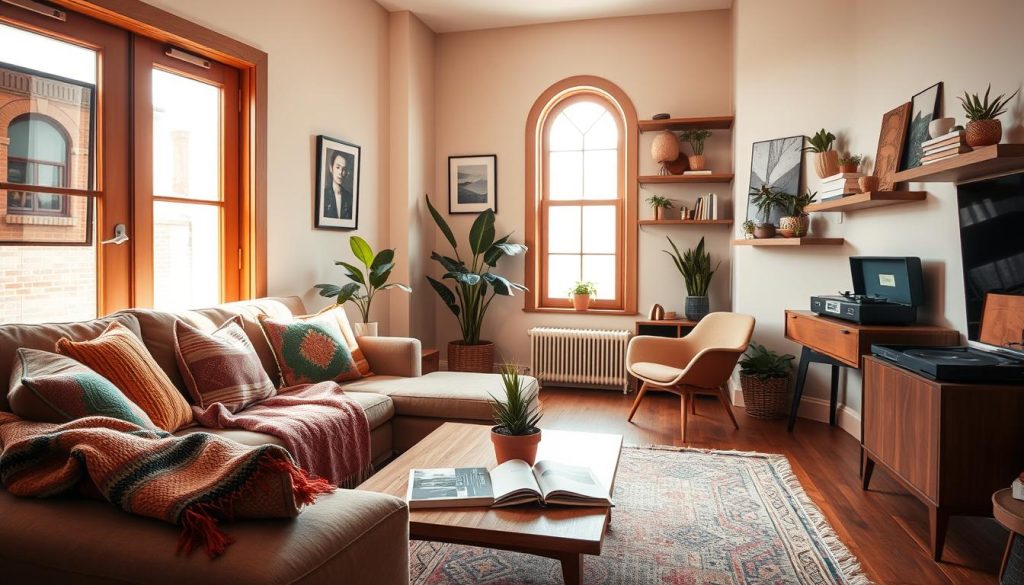
Adding art and decor that speaks to us makes us feel at home. Photos from trips and local items make our space lively. They spark conversations and share our stories.
Using bright colors and textures makes our space lively. It encourages us to work together and be creative. It also lets us keep our unique selves within the group.
Showing off family items and travel souvenirs adds character. They start interesting talks and celebrate our differences. These touches make our space warm and inviting.
They turn our living area into a collection of memories. This makes our shared home a special place for everyone.
| Type of Personal Touch | Impact on Community | Examples |
|---|---|---|
| Artworks | Encourages dialogue and creativity | Local art pieces, personal portraits |
| Family Heirlooms | Strengthens emotional connections | Antique items, inherited decor |
| Travel Mementos | Celebrates diversity of experiences | Souvenirs, photographs from travels |
Making our co-living spaces personal does more than just look good. It brings us together and makes us feel like we belong. By sharing our stories, we make our living areas truly special.
We aim to make our sustainable co living space welcoming and useful. Choosing the right furniture and soft textiles helps us achieve this goal. This way, our shared living room becomes a place where everyone can enjoy their daily moments.
Choosing ergonomic furniture is key for our co living area’s design. It ensures comfort during long hours of socializing or working. Chairs that support our posture and desks that fit our activities make our space enjoyable.
By focusing on ergonomic furniture, we boost daily productivity. It also helps us relax in the midst of a busy shared lifestyle.
Textiles play a big role in making our space warm and inviting. Cushions and throws encourage us to stay longer in our shared living room. They add comfort and make socializing more fun.
By trying out different colors, patterns, and textures, we can make our space unique. High-quality fabrics not only look good but also last long. They add charm and comfort to our space while keeping it functional.
Embracing sustainability in our shared spaces is key. Choosing eco-friendly materials is at the heart of this. It makes our co living space better and healthier. Using reclaimed wood and low-VOC paints is a big step towards a greener living.
Using eco-friendly materials in our co living room decoration is a big plus. It connects us to nature and makes our spaces warm and inviting. Wood, stone, and leather are popular choices, as they bring a sense of calm.
Investing in sustainable furniture is smart. Brands like Greenington use local materials, which cuts down on emissions. Plus, furniture without harmful chemicals is better for our air. These choices make our living spaces healthier and more sustainable.
Adding plants to our shared spaces is good for looks and health. Plants like sword ferns and ivy clean the air and make our spaces feel fresh. Indoor gardening is becoming popular, allowing us to grow fruit trees and herbs.
Plants bring calm and positivity to our living rooms. They make our spaces lively and show our dedication to living green. For more ideas on eco-friendly design, check out this guide.
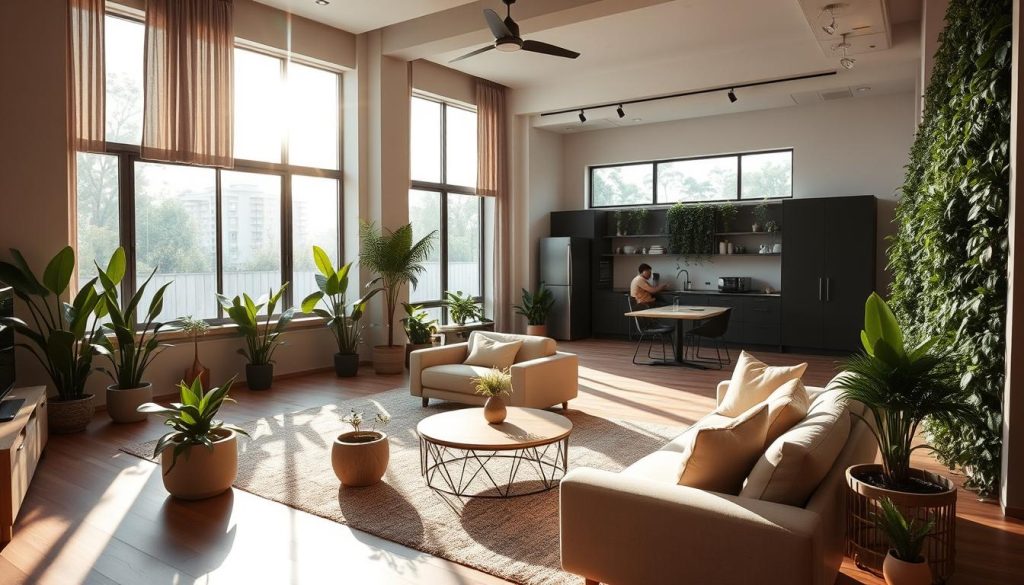
In modern co-living setups, keeping things organized is key. Clever storage solutions are vital for small spaces. As our lives change, our living areas must too, blending function and beauty.
Every inch counts in small spaces. We use:
These ideas help us stay organized and make our space look better. Adding baskets and boxes can make it feel more like home.
Hidden storage makes a big difference. It keeps our space tidy and open. Some ideas include:
We follow these tips to make our co-living space welcoming and organized.
Looking ahead, co-living interiors will evolve with technology and flexibility. Smart home systems are becoming common, making our spaces convenient, secure, and energy-efficient. These technologies allow us to control lighting, security, and climate with just a touch.
For those who love technology, this integration brings a modern and efficient lifestyle. It’s all about making our living experience better.
Co-living room design will also become more flexible. We’ll see spaces that change from work areas to cozy gathering spots. This shows our need for homes that fit our changing lives.
By using multifunctional furniture and smart layouts, we can enjoy our co-living spaces more. It’s all about making our living experience better.
Urban living is changing, and so are our needs for co-living spaces. We want community-focused designs that meet our unique preferences. Providers are now focusing on flexible leasing and personalized services.
Whether it’s local experiences or exclusive amenities, co-living’s future depends on these offerings. It’s about creating spaces that reflect our lifestyle choices and stay relevant in our fast-paced world.
Co-living is a new way to live where everyone has their own space but shares common areas. It’s great for young people and students because it helps them meet others and live flexibly.
Co-living spaces are affordable and offer flexible leases. They have cool amenities and a strong community feel. This helps people make friends and feel less alone than in regular homes.
For a cozy living room, use open layouts and versatile furniture. Choose calm colors with bright touches. Adding different lights and soft textures makes it even cozier.
Natural light boosts mood and focus. Big windows and mirrors help bring in more sunlight. This makes the space feel welcoming and encourages people to interact.
In small spaces, clever storage is key. Try ottomans with secret spots, wall shelves, and under-bed storage. These ideas help keep things tidy and stylish.
Make your space your own with art, photos, and souvenirs. These personal touches tell your story and add to the community vibe, making the space more special.
Tech makes co-living better with smart systems for lights, security, and temperature. It makes life easier and attracts people who love new tech.
Choose green materials like recycled wood and safe paints. Adding plants also makes the space healthier and shows you care about the planet.
Nestled in the bustling Singapore, Livhola is a co-living space crafted for those who seek comfort, convenience, and community.
© 2024 Livehola. All Rights Reserved