

Singapore’s vibrant expat community is turning to co-living spaces for a better living experience. Co-living is evolving fast, making it a top choice for comfort, convenience, and community in this busy city.
At Hei Homes, we know how important a home away from home is. Our co-living spaces offer a smooth living experience with all-inclusive packages and flexible lease terms. For current promotions and to schedule a no-obligation viewing, contact us via WhatsApp at +6594341391.
Co-living in Singapore is becoming more popular. It shows a move towards living in a more communal and flexible way. Young professionals and expats are drawn to these spaces as the city grows.
Co-living spaces mix private areas with shared spaces. This creates a community feel among residents. It’s different from traditional housing, which is more rigid.
Singapore’s dense urban area and fast life make co-living appealing. The strong economy and high living standards also attract co-living operators.
EdgeProp reports about 20 co-living operators in Singapore. They manage over 9,000 rooms. By Q3 2023, 800 more units will be added. This shows co-living’s growing appeal.
Young professionals and expats are the main targets for co-living in Singapore. They like the flexibility and community. Key traits include:
Knowing these demographics helps co-living operators serve their audience better.
Expats and young professionals find co-living in Singapore a great choice. It’s a cost-effective and community-focused alternative to traditional housing. This modern way of living is becoming more popular for its many benefits.
Places like Hei Homes offer all-inclusive packages. This makes budgeting in Singapore’s pricey housing market easier. By sharing amenities and utilities, costs are greatly reduced for each resident.
Co-living’s biggest plus is the built-in community. It lets residents meet others with similar interests. This creates a sense of belonging and opens up chances for professional networking.
Co-living spaces have flexible lease terms. They’re perfect for expats and young professionals who don’t want long-term leases.
This flexibility is great for Singapore’s fast-paced life. It’s perfect for those who often need to move.
Also, co-living spaces are furnished. This saves residents from buying furniture and appliances themselves.
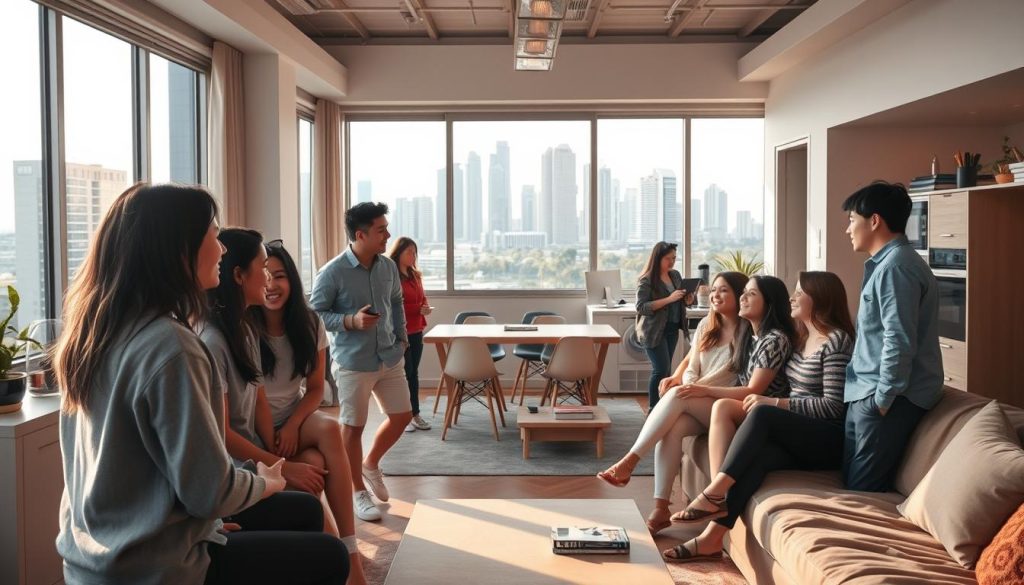
Choosing co-living in Singapore means getting affordability, community, and flexibility. It’s a great choice for those wanting to improve their living experience.
Co-living spaces in Singapore are becoming more popular. It’s key to respect and communicate well with your housemates. Creating a harmonious living space is essential for everyone’s benefit.
Co-living spaces in Singapore are often multicultural. It’s important to respect different backgrounds and lifestyles. We should keep common areas clean and comfortable for all.
Good communication is vital for a peaceful co-living experience. We should be clear, respectful, and open when talking to our housemates. Using shared messaging apps helps keep everyone informed.
Living close to others means setting boundaries for comfort. We should talk about and agree on rules, like quiet hours or guest policies. This ensures everyone’s needs are respected.
Managing noise is critical in co-living spaces. We should be mindful of noise levels, mainly during rest hours. Using earplugs or white noise machines can help.
Co-living promotes community, but personal space is also important. We should respect each other’s need for alone time. Creating private areas in our living space is key.
Finding the right co-living space in Singapore can be tough. But knowing what to look for makes it easier. Look at location, amenities, and contract terms.
The spot of your co-living space matters a lot. It impacts your commute, access to shops, and life quality. Think about how close it is to work, public transport, and local shops.
For more tips on co-living in Singapore, check out our guide to co-living in Singapore.
Singapore’s hot weather means you need certain amenities. Look for places with air conditioning, fast internet, and laundry. Also, check if they have shared areas like lounges and kitchens.
| Amenity | Importance | Typical Providers |
|---|---|---|
| Air Conditioning | High | Most co-living spaces |
| High-Speed Internet | High | All co-living spaces |
| Laundry Facilities | Medium | Many co-living spaces |
It’s important to know about the contract terms and flexibility. Choose places with flexible lease options and low penalties for leaving early.
Ready to find your perfect co-living space? Call us on WhatsApp at +6594341391 for a viewing without any commitment.

Singapore’s urban landscape is filled with vibrant neighborhoods perfect for co-living. The city-state offers a wide range of living experiences. You can find everything from the bustling city center to more laid-back districts.
Professionals often choose central areas like the Central Business District and River Valley. These spots are close to major work hubs and have lots of amenities.
For those on a budget, Tiong Bahru is a great choice. It’s a mix of old and new Singapore. It has cultural attractions and modern amenities.
Emerging neighborhoods like Kallang and Lavender are also worth looking at. They’re affordable and well-connected.
Choosing a co-living neighborhood means considering its public transport access. Singapore’s MRT system is efficient. Here’s a comparison of some popular co-living neighborhoods:
| Neighborhood | Proximity to MRT | Amenities |
|---|---|---|
| Central Business District | Excellent | Restaurants, Shopping Malls |
| Tiong Bahru | Good | Cafes, Heritage Sites |
| River Valley | Excellent | Shopping, Nightlife |
For unique co-living experiences, check out LivHola’s Co-Living Experiences. The right neighborhood depends on your lifestyle and priorities. Whether you like the city’s hustle or a relaxed vibe, Singapore has a co-living spot for you.
When you think about co-living in Singapore, budgeting is key. It makes sure you live comfortably without stress. Places like Hei Homes offer different pricing models to help with budgeting.
All-inclusive pricing models can save you money. They combine utilities, Wi-Fi, and other amenities into one monthly fee. This makes budgeting easier and avoids surprise costs.
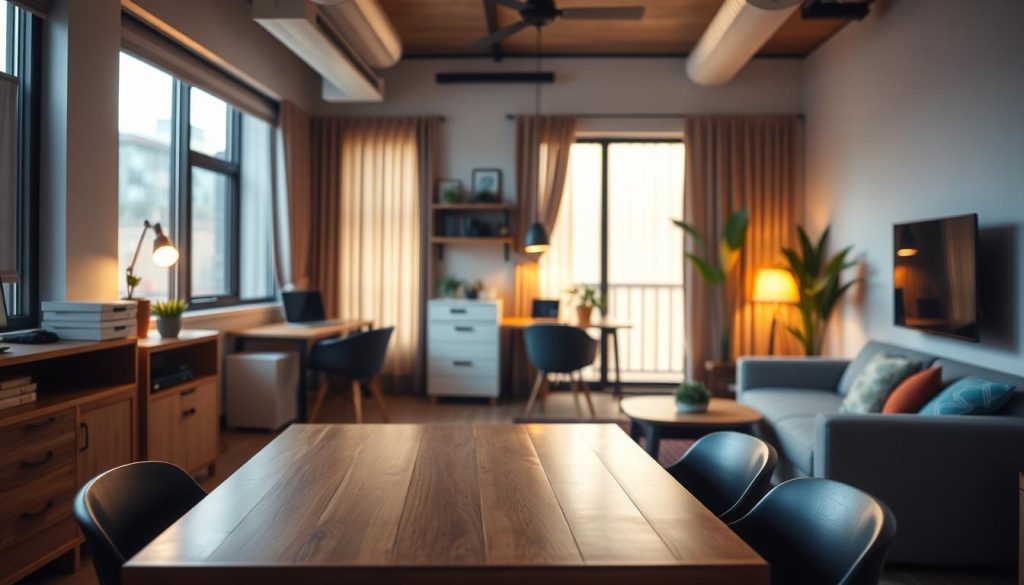
Even with all-inclusive pricing, watch out for hidden costs. These might include extra fees for laundry or gym use.
To cut costs in co-living, try a few things. Reduce energy use and share things with your housemates.
| Money-Saving Strategies | Potential Savings |
|---|---|
| Reducing energy consumption | Up to 10% on utility bills |
| Sharing resources with housemates | Up to 20% on grocery bills |
Want the latest deals on co-living in Singapore? Contact us on WhatsApp at +6594341391 for special offers.
Co-living in Singapore is more than just living together. It’s about the community events that bring people together. These events help create a sense of community and belonging among people from different backgrounds.
Co-living spaces in Singapore host many events. From casual gatherings like potluck dinners and game nights to workshops on sustainability and cultural exchange programs. These events aim to meet the varied interests of residents, ensuring there’s something for everyone.
Joining community events has many benefits. You can network with others, learn new skills, and make lasting friendships. As one co-living resident said, “The community events at my co-living space have helped me feel at home in Singapore.”
Community events also offer a chance for cultural exchange. They allow residents to learn about and appreciate the diverse cultures in Singapore.
While co-living spaces plan many events, residents can also start their own. This could be as simple as organizing a monthly outing or a cultural celebration. By getting involved in planning events, residents can make their co-living experience even better and contribute to the community spirit.
In Singapore’s diverse co-living spaces, being culturally sensitive is essential for living together well. We look at how to navigate this multicultural world effectively.
Singapore is known for its multicultural society, with people from Chinese, Malay, Indian, and Eurasian backgrounds living together. In co-living spaces, this diversity is even more pronounced. It creates a vibrant mix of cultures. We should embrace this diversity by being open to different customs and traditions.
Food plays a big role in Singaporean culture, and sharing meals in co-living spaces can help us bond. But, it’s important to follow good kitchen etiquette. We should label our food and clean up after ourselves to keep the kitchen tidy and harmonious.
Joining in local events and festivals is a great way to celebrate diversity in co-living spaces. We can organize or participate in celebrations like Chinese New Year, Deepavali, or Hari Raya Puasa. This helps build a sense of community.
By following these tips, we can make our co-living spaces culturally sensitive and inclusive.
Singapore is moving forward with its ‘Smart Nation’ vision. Co-living spaces are leading the way by using technology to improve life for residents. This change is reshaping how we live, work, and connect with others in our communities.
In Singapore, co-living spaces use special apps to manage the community better. These apps help residents report problems, book shared spaces, and meet their neighbors. They make life easier and help build a strong community spirit.
Digital payments are getting more common in Singapore’s co-living areas. They let residents handle their bills and payments online. This makes life more convenient and cuts down on paperwork.
Modern co-living places in Singapore have smart home tech. This includes voice-controlled lights and temperature settings. It makes living more comfortable and helps save energy.
| Technology | Benefits |
|---|---|
| Co-Living Apps | Streamlined community management, enhanced resident engagement |
| Digital Payments | Convenience, reduced administrative burdens |
| Smart Home Features | Enhanced comfort, energy efficiency |
In Singapore’s lively co-living communities, finding the right balance is key. It’s about engaging with others and enjoying your alone time. Co-living spaces aim to build a sense of community but can be tough for those who love their alone time.
To keep co-living privacy alive, setting personal boundaries is essential. You can do this by setting quiet hours or using room dividers. These help define your space within shared areas.
Setting healthy boundaries is critical in co-living. Residents must talk openly with their housemates. This way, they can avoid conflicts and keep the living space comfortable.
Knowing when to socialize and when to take a break is important. Joining community events can strengthen bonds. But, it’s also key to have time for yourself.
When you need a break, Singapore’s city offers many quiet spaces. You can find serene gardens or quiet cafes to escape the city’s noise. 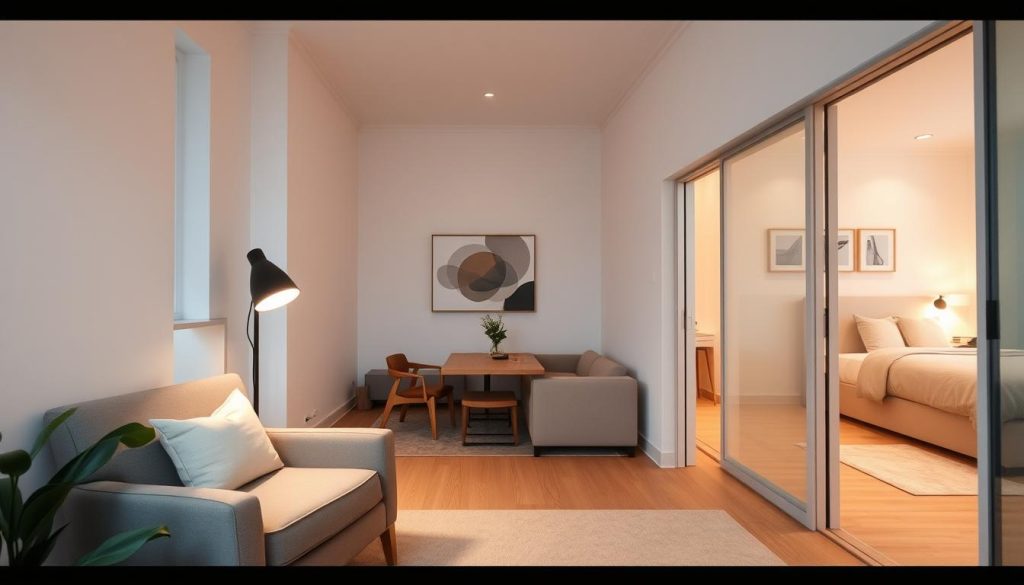
By finding the right balance between socialization and personal space, co-living in Singapore can be rewarding. You get to enjoy both worlds.
Co-living is becoming more popular in Singapore, and we need to focus on being green. This modern living style has an environmental impact. We can make co-living spaces more sustainable by cutting down on waste, saving energy, and starting eco-friendly projects.
It’s key to cut down on waste in co-living. We can do this by starting recycling programs, cutting down on single-use plastics, and pushing for a zero-waste lifestyle. For example, having recycling bins and composting areas can help a lot.
Energy saving is important in Singapore’s hot weather, where AC uses a lot of energy. We can save energy by using appliances that use less power, making AC systems work better, and teaching residents how to save energy.
Many co-living places in Singapore are going green. They use eco-friendly materials, have green roofs, and encourage residents to live green.
Singapore’s Green Plan 2030 wants to cut down on carbon emissions and be more sustainable. Co-living spaces can help by using green practices and teaching residents about the environment. For more on co-living in Singapore, check out LivHola’s Co-Living Solutions.
By going green, we can make co-living in Singapore better for the planet. It’s important to keep finding new ways to lessen our impact and work towards a greener future.
Co-living in Singapore offers a unique way to live. It makes life more affordable, flexible, and community-focused. This suits Singapore’s busy city life well.
Co-living is not just a place to live. It’s about connecting with others, building strong relationships, and joining the local community. It brings us closer to others, opens up networking chances, and supports a green lifestyle.
Thinking about co-living in Singapore means we can change our living experience for the better. It lets us enjoy a lively, welcoming, and rewarding life. This matches our values and dreams, making our living experience better.
Co-living means living in a shared space where you have your own room but share areas like kitchens and bathrooms. It’s different from regular housing because it’s more about community. You’ll find events and amenities designed to bring people together.
Co-living is gaining popularity because it’s affordable and offers a sense of community. Young professionals and expats find it appealing. It provides a social and convenient way to live in the city.
When picking a co-living space, think about location, amenities, and contract terms. Consider your lifestyle and what you need. This will help you find a place that fits your life.
Co-living is a budget-friendly option in Singapore’s pricey housing market. By sharing spaces, costs are split. This makes living more affordable.
To respect shared spaces, be considerate of others’ cultures and personal space. Clean up after yourself and label your food. Also, keep noise levels down to keep the environment peaceful.
Co-living spaces in Singapore host events like cultural celebrations and networking sessions. These events help build a community spirit. They’re great for meeting new people.
To balance privacy and socializing, create your own space and set boundaries. Know when to be alone or join in. Being respectful and open with your housemates is key to a good living environment.
Technology is important in co-living, with apps for managing spaces and digital payments. It makes living easier and more efficient.
To help the environment, reduce waste and conserve energy. Recycle, use less plastic, and turn off lights. Working together, we can make a difference.
Singapore’s Green Plan2030 aims to be more sustainable and cut carbon emissions. Co-living spaces can support this by being eco-friendly and reducing waste.
To find affordable co-living, research and compare prices. Look at location, amenities, and contract terms. This way, you’ll find the best value for your money.
Nestled in the bustling Singapore, Livhola is a co-living space crafted for those who seek comfort, convenience, and community.
© 2024 Livehola. All Rights Reserved