

In Singapore’s busy streets, many of us yearn for a sense of belonging. The city’s high housing costs and growing population make finding a home tough. Yet, we’re learning that home is more than just a place to live—it’s about community living.
Co-living is changing how we think about affordable, lively places to live. With over 9,000 co-living rooms and more than 20 providers, these spaces are redefining urban living. They offer private rooms and shared facilities, events, and resources.
Co-living is about more than just a place to stay. It’s about building a community and living sustainably. This shift towards shared housing encourages us to rethink our living spaces. It turns them into places for real connection and growth.
Co-living is a big change in how we live today. It combines community, affordability, and flexibility. This fits well with what people want in housing in Singapore.
Co-living lets people share spaces but keeps their privacy. It’s different from old-style communal living because it focuses on community. Places like kitchens, lounges, and work areas help people meet and support each other.
This way of living makes us feel part of a group. It also helps us meet people from different backgrounds. This can improve our social and work lives.
Co-living has many good points for our lives. Here are some key benefits:
If you want to know more about co-living, check out this article. Co-living changes how we live and connect with others.
In today’s cities, community living is becoming more popular. It focuses on building connections and friendships among people. This is a great option for millennials who want to save money and feel part of a community. Living in a community can make our lives better and more fulfilling.
At the heart of co-living is the community. It creates a welcoming place where people can meet and work together. These spaces help fight loneliness in cities, making everyone feel better.
They help us build strong networks. This is key for a happy life in busy cities.
Co-living offers many chances to meet others. There are events and shared areas like gyms and offices. We do things together, making friends and sharing ideas in a lively setting.
This helps us grow and make lasting bonds. Living together in these ways makes our lives richer and more supportive.

| Aspect | Traditional Housing | Community Living |
|---|---|---|
| Cost | Higher individual rent | Lower shared expenses |
| Social Interaction | Limited | Enhanced community engagement |
| Privacy | Individual units | Balance of private rooms and shared spaces |
| Lease Flexibility | Long-term contracts | Short-term options available |
| Amenities | Variable | Inclusive shared amenities |
As cities grow, community living is becoming a top choice. It offers a mix of affordability and social connection. The rise of co-living shows a big change in how we see housing. It’s moving from solo living to shared experiences in our busy cities.
Modern co-living spaces are changing how we live in cities. They offer flexibility and meet the needs of different people. These places combine convenience, style, and green living in a community-focused way.
The charm of co-living comes from its flexibility. People can choose from short-term to long-term leases. This appeals to young professionals, students, and digital nomads who need flexible housing.
Modular living units help make the most of space. They let people customize their homes while staying part of a lively community.
Modern co-living spaces offer great amenities. These include:
Advanced tech and smart home features add to the co-living experience. These features make life easier and healthier. They also help us live in harmony with nature.

Co-living offers a complete way of living. It’s not just a place to stay. It’s a lifestyle that combines comfort, community, and modern amenities.
| Feature | Description | Benefits |
|---|---|---|
| Lease Flexibility | Short to long-term lease options available | Accommodates changing life circumstances |
| High-Speed Internet | Fast and reliable connectivity | Supports remote work and leisure activities |
| Communal Areas | Shared kitchens, lounges, and workspaces | Encourages social interaction among residents |
| Health Amenities | Fitness centers and wellness programs | Promotes physical and mental well-being |
| Sustainability Practices | Incorporation of eco-friendly resources | Reduces the overall carbon footprint |
As cities grow, we need to change how we live. Co-living spaces are a big step towards living sustainably. They offer affordable homes and help us care for our planet together.
Co-living places use smart ways to save the planet. They have:
These green steps help us live better together. They make us all work together for a cleaner world.
Co-living makes a big difference in reducing our carbon footprint. It uses shared spaces wisely. This leads to:
Co-living also helps protect nature by reducing the need for more land. It’s a smart way to grow cities while keeping our planet healthy.
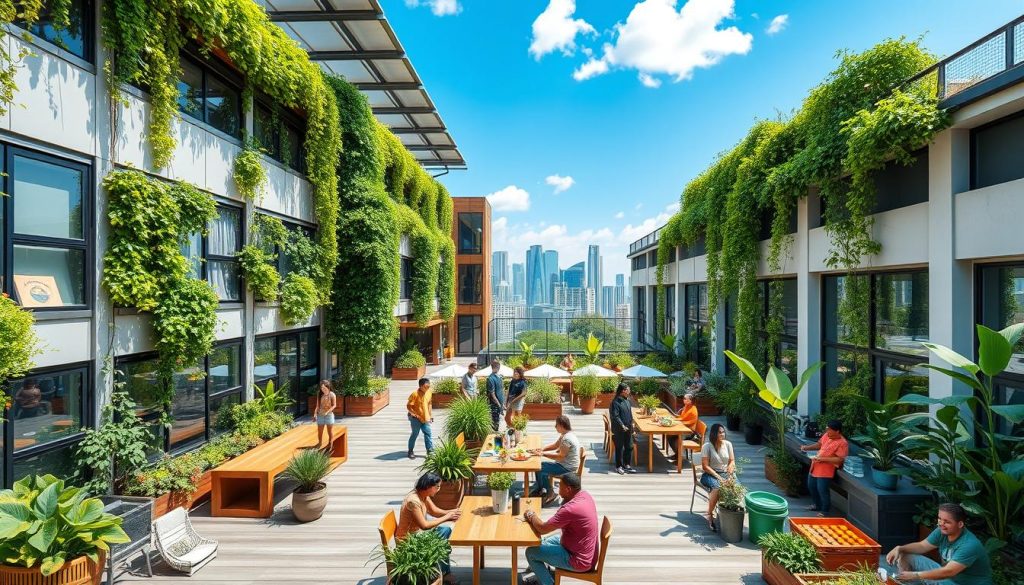
Technology is changing how we live together in co-living spaces. It makes our homes more comfortable, safe, and connected. Smart features and new management tools are making our living spaces better, meeting our current needs.
Co-living spaces are getting smarter, making life easier for residents. With automated lights, temperature control, and security, managing your home is a tap away. Biometric systems add an extra layer of security, making homes safer.
Smart locks and digital check-ins are also making moves easier. They change how we interact with our homes, making it more convenient.
Technology is now key in managing co-living spaces. Mobile apps help residents stay in touch, planning events and sharing news. Platforms like ColivHQ handle everything from leases to maintenance, making things run smoothly.
This tech helps build a community spirit. Residents can share and join in on virtual events, like cooking classes. It makes living together better.

| Feature | Description | Benefits |
|---|---|---|
| Smart Home Devices | Automated devices for lighting, temperature, and security | Increased convenience and energy efficiency |
| Mobile Applications | Tools for communication and management | Streamlined operations and improved resident engagement |
| Biometric Security | Facial recognition and smart locks | Enhanced safety and peace of mind |
| Workflow Automation | Automated processes for property management | Increased efficiency and reduced manual tasks |
Technology is leading us to a new way of living. It’s about finding a balance between convenience and community. As we keep evolving, technology’s role in our lives will only grow stronger.
In Singapore, where housing costs are high, co-living is a great option. It’s popular among young professionals, expatriates, and students. They can live in good areas without spending too much money.
Co-living lets people save up to 30% on living costs. This is because they get to share spaces and amenities. It’s a way to live affordably while enjoying a community vibe.
Co-living is cheaper than renting a whole apartment. It costs between $800 and $3,500 a month. This includes utilities and fast internet.
It’s a smart choice for those who want to live in the city center. It helps people save money and enjoy a good living experience.
Co-living means you only rent a room, not a whole place. This is different from traditional rentals that require a full lease. It’s a more affordable way to live.
It also helps people connect with others. This is something traditional rentals often lack. As property prices rise, co-living becomes more appealing. It’s growing fast, with a 30% increase in a year.
Co-living spaces are made for many kinds of people. Young professionals and students are big fans. Expats and digital nomads also love it for its flexibility and community feel.
Young people, or millennials, really like co-living. With 1.46 million young renters in Australia, they need places to live that are affordable and easy to get to. Co-living offers social chances, networking, and easy living, fitting their busy lives.
These spaces are great for working together and making friends. They help people grow both personally and professionally.
Expats and digital nomads are another big group. They need flexible leases and to feel at home fast. Co-living gives them resources, networking, and shared learning to help them settle in.
The lively community feel helps them meet others with similar interests. This makes their experience richer as they explore new places and cultures.
| Demographics | Characteristics | Needs and Preferences |
|---|---|---|
| Young Professionals and Students | – Ages 25-34 | – Affordable living arrangements |
| – Seeking social engagement | – Networking opportunities | |
| Expats and Digital Nomads | – Diverse cultural background | – Flexibility in rental agreements |
| – Adaptive lifestyles | – Community integration resources |
The co-living scene in Singapore is changing fast. It’s moving towards a future that meets the needs of many people. We’re seeing more flexibility and better amenities, making co-living more attractive. This change opens up new chances for both those who offer co-living and those who live there.
Several trends are shaping the co-living market. Providers are adding:
This shift shows co-living is becoming more than just temporary housing. It’s becoming a lifestyle choice that fits today’s living needs.
The co-living sector is set for big growth. Providers can:
With co-living’s popularity, now is the perfect time to invest in spaces that offer more than just a place to live. They can create a lively community lifestyle.
| Property Location | Total Site Area (sqm) | Total Gross Floor Area (sqm) |
|---|---|---|
| 115 Geylang Road | 305.6 | 922.18 |
| 471 Balestier Road | 366.1 | 1107.88 |
| 404 Pasir Panjang Road | 1544.6 | 2452.26 |
By embracing these trends and opportunities, the co-living market is ready to change how we think about living spaces. It’s set to play a bigger role in Singapore’s rental scene.
We make sure every resident in our co-living spaces has a great experience. A clean and welcoming place is key for a strong community. We work with professional cleaning services to keep all shared areas clean and inviting.
A clean space makes residents happy. Our cleaning teams focus on common areas, keeping them clean and welcoming. Regular cleaning helps create a healthy and pleasant living environment.
Interested in our co-living options or cleaning service deals? Contact us on WhatsApp at +65 9434 1391 for a free quote. Let’s make your co-living experience feel like home.
Co-living mixes private rooms with shared spaces. It creates a community vibe while keeping privacy and social life in mind. It’s a new way to live in cities together.
Co-living cuts down on costs by sharing rent and bills. It’s cheaper than renting alone.
Co-living boosts social ties through shared spaces and events. It helps people make friends and share ideas, improving their happiness.
Yes, co-living often uses green practices. This includes energy-saving gadgets and sharing resources to lessen waste and help the planet.
Co-living offers flexible leases. It’s perfect for those who need short-term housing, like students or digital nomads.
Co-living lets you rent just a room, not the whole place. It’s cheaper and more community-focused than traditional rentals.
Modern co-living has many perks. You’ll find gyms, lounges, laundry, and outdoor spots. These make living better and more fun.
Tech makes co-living better with smart homes and apps. It also helps with planning events and talking to the community.
Young professionals, students, expats, and digital nomads love co-living. They want affordable places, social scenes, and flexibility.
Co-living will grow with new tech, different living styles, and more places. It will meet changing housing needs.
Clean spaces are key in co-living. They keep areas nice and healthy. This makes living there better and safer.
Nestled in the bustling Singapore, Livhola is a co-living space crafted for those who seek comfort, convenience, and community.
© 2024 Livehola. All Rights Reserved