Singapore’s lively vibe has led to a new way of living. It’s all about community, comfort, and being convenient. The co-living trend is really taking off, with over 80 options in top areas.
We’re seeing a big change towards modern co-living spaces. These spaces are changing how we live in cities. They mix comfort, community, and flexibility, drawing in many people.
Want to know about the latest co living space design trends in Singapore? We’re here to show you the co-living world. Learn more about our community living spaces. Contact us via WhatsApp at +6594341391 for the latest deals and to book a viewing.
Key Takeaways
Over 80 co-living options available across prime neighborhoods in Singapore.
Modern co-living spaces offer comfort, community, and flexibility.
The co-living trend is transforming urban living in Singapore.
Co-living spaces foster a sense of community and connection.
Flexible living arrangements cater to diverse needs and preferences.
The Evolution of Co-Living in Singapore
Singapore is leading the way in new housing ideas. The old ways of living are being replaced by modern co-living. This change meets the needs of today’s residents.
From Traditional Housing to Modern Co-Living Concepts
The move to co-living shows a big change in how we live and connect. Co-living spaces mix privacy and community living. They’re perfect for young professionals.
Key Factors Driving the Co-Living Movement
Land Scarcity and Housing Affordability
Land is scarce, and housing is expensive in Singapore. Co-living offers an affordable alternative.
Changing Social Dynamics Among Young Professionals
Young professionals are changing how they live. They want co-living spaces for
Co-living in East Asia, like Singapore, is growing fast. It’s driven by young professionals’ demand for affordable, community-focused homes. This trend will likely keep growing.
Understanding Today's Co Living Space Design Trends
Co-living in Singapore is changing fast. Modern co-living spaces are more than just places to live. They’re about building a community together.
Designers consider many things, like the city and the need for both privacy and community.
Defining Modern Co-Living Spaces
Modern co-living spaces are made to be useful and flexible. They use smart home technology and common areas to bring people together.
How Singapore's Urban Context Shapes Design Approaches
Singapore’s tight spaces and many people influence co-living designs. Designers find creative ways to use every inch.
They use urban design to make spaces that are lively and encourage people to meet.
The Balance Between Privacy and Community
Finding the right mix of privacy and community is hard. People want their own space but also like to share areas.
Co-living spaces use flexible designs and shared areas to find this balance. They create a place where everyone can thrive, both alone and together.
Minimalist and Multifunctional Spaces
In Singapore, co-living spaces are moving towards minimalist and multifunctional designs. This shift is driven by the need for efficient, adaptable, and clutter-free living areas. Designs now focus on saving space while improving the living experience.
Smart Storage Solutions for Small Footprints
Co-living spaces face the challenge of maximizing storage without losing living area. Companies like Hmlet and Figment are using smart storage solutions to solve this problem. They offer hidden compartments and modular furniture to keep spaces tidy.
For example, beds with storage drawers and foldable desks are becoming common. These designs save space and enhance the look of the area.
Transformable Furniture Innovations
Transformable furniture is becoming popular in co-living spaces. It can change to meet different needs, perfect for small or shared areas.
Space-Saving Bed Designs
Space-saving beds like murphy beds and loft beds are in demand. They let people use the space under or around the bed for other activities.
Modular Seating and Work Areas
Modular seating and work areas help create flexible spaces. They can be rearranged for various activities, from social events to work sessions.
Design Element
Benefit
Example
Smart Storage
Maximizes space, reduces clutter
Hidden compartments, modular furniture
Transformable Furniture
Adaptable, space-efficient
Murphy beds, modular seating
Multifunctional Spaces
Enhances living experience, versatile
Shared kitchens, collaborative workspaces
Biophilic Design Elements in Co-Living Spaces
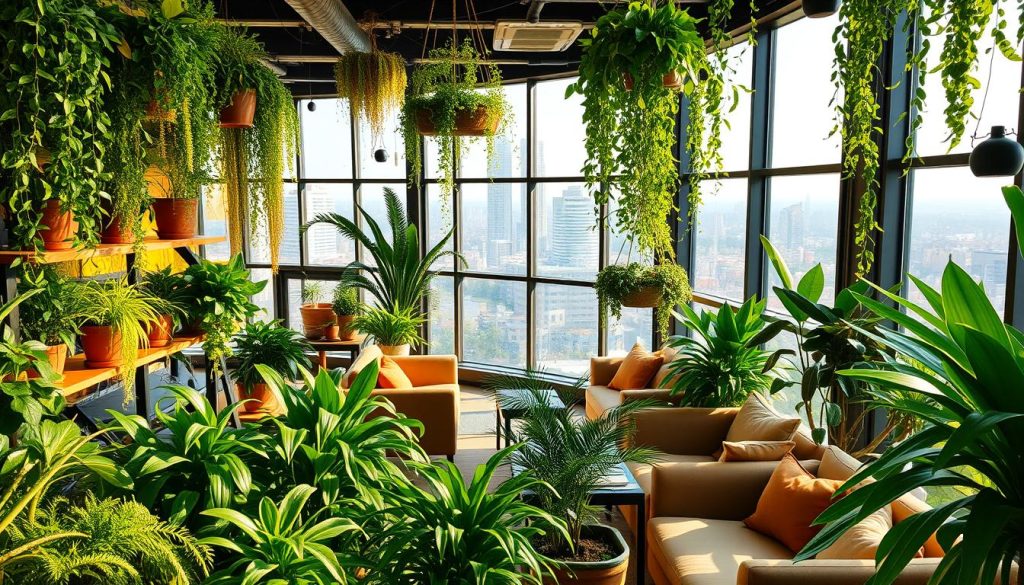
Biophilic design is changing co-living spaces in Singapore. It makes living healthier and more eco-friendly. These spaces bring nature inside to boost residents’ wellbeing.
Incorporating Natural Materials and Greenery
Using natural materials like wood, stone, and plants is key. They make spaces look good and feel calm. Greenery adds to the beauty, from plants to green walls, improving air and looks.
Indoor Gardens and Living Walls
Indoor gardens and living walls are now common. They make spaces look better and let people connect with nature. They also help lower stress and boost mood.
Natural Lighting Optimization in Singapore's Climate
In Singapore’s hot weather, natural lighting is vital. Big windows, skylights, and mirrors help bring in more light. This cuts down on the need for artificial lights, making homes nicer.
Technology Integration in Modern Co-Living
Modern co-living spaces in Singapore use advanced technology to build community and ease. As we live in cities more, technology is key to better co-living.
Smart Home Systems for Community Living
Smart home systems change how we live in our homes. They control lights, temperature, and security easily. This makes living more comfortable and personal.
“Smart technology is now essential in co-living,” says it’s important to add tech to our daily lives.
Contactless Access and Security Features
Contactless access and top-notch security are common in co-living. They make living safe and easy. Biometric authentication and smart locks mean no hassle.
Digital Community Management Platforms
Digital tools help manage community living. They make it easy for people to talk and plan events. This builds a strong community feeling.
Resident Apps and Communication Tools
Resident apps are key for digital community management. They are a place for info and talking. They help people stay in touch and join in on community activities.
Technology makes co-living in Singapore better and sets a new standard. It’s clear tech will keep shaping co-living’s future.
Community-Centric Design Features
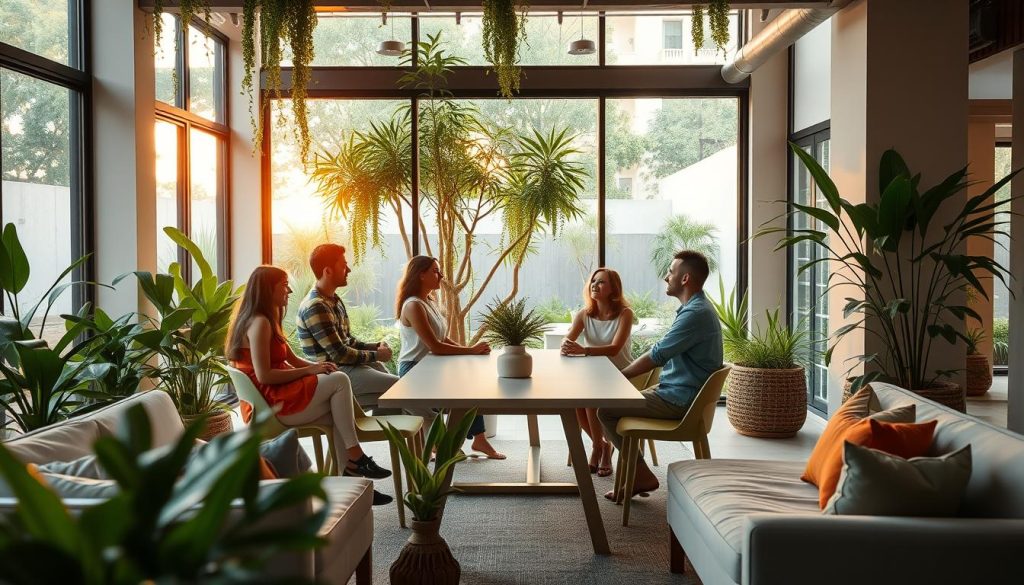
In Singapore’s lively co-living scene, community-centric design is changing how we live and connect. It focuses on making spaces where people can bond and feel at home.
Collaborative Workspaces for Remote Workers
Collaborative workspaces are a big part of this design. They’re made for remote workers, with fast internet, comfy chairs, and bright lights. This helps them work well and think creatively.
Shared Kitchens and Dining Areas
Shared kitchens and dining spots are key too. They help people meet and share meals, building friendships. With modern kitchens and big dining areas, it’s easy to host parties and events.
Recreational and Wellness Zones
Recreational and wellness areas are also important. They include gyms, yoga rooms, and lounges for staying fit and relaxed. These spaces help keep a balance between work and play.
Rooftop Gardens and Social Spaces
Rooftop gardens and social spots are special features. They offer a calm break from city life, letting people enjoy nature and each other’s company. Experts say, “Rooftop gardens are beautiful and bring people together.” For more on co-living spaces, check out Livhola’s co-living real estate page.
Cultural Influences on Singapore's Co-Living Aesthetics
Cultural influences shape the design of co-living spaces in Singapore. The city’s mix of cultures influences these modern living areas.
Blending Eastern and Western Design Elements
In Singapore’s co-living spaces, we see a mix of Eastern and Western designs. Traditional Asian motifs meet modern Western minimalism. This blend creates a unique and peaceful living space.
Celebrating Singapore's Multicultural Heritage
The multicultural heritage of Singapore is celebrated in these spaces. Vibrant colors and patterns inspired by different cultures add a special touch. This makes the living areas truly unique.
Neighborhood-Specific Design Considerations
Co-living spaces also consider the local area’s design. They use elements that connect with the community and environment. This helps residents feel a sense of belonging.
By embracing cultural influences, co-living spaces in Singapore show the city’s diversity. They offer a unique living experience that is truly Singaporean.
Sustainability Practices in Co-Living Design
We’re seeing a big change in co-living spaces, with sustainability leading the way. The world faces big environmental issues, making sustainable co-living design essential.
Using eco-friendly materials is key in sustainable co-living design. We’re moving towards materials that are good for the planet, last long, and look great. Think reclaimed wood, bamboo, and paints that don’t release harmful fumes.
Eco-Friendly Materials and Construction
The materials we choose are vital in making co-living spaces green. Going for sustainable materials cuts down on waste and saves natural resources. For example, recycled materials for insulation and flooring can make a big difference.
Energy Efficiency Innovations for Tropical Climates
In Singapore’s hot climate, saving energy is key to reducing carbon footprint. We’re seeing the use of solar panels, energy-saving HVAC systems, and smart lights. These help cut down energy use and costs, making living spaces more sustainable.
Waste Reduction Systems and Circular Economy Principles
It’s important to have systems for reducing waste and following circular economy principles in co-living design. This means designing spaces for recycling, composting, and less waste. By doing this, co-living spaces can lessen their environmental impact and encourage a sustainable lifestyle among residents.
By adding these sustainability practices to co-living design, we can make spaces that are good for the planet and better for people. As we look to the future, sustainability will be a big part of shaping co-living spaces in Singapore.
How These Design Trends Enhance Quality of Life
Co-living spaces in Singapore are changing urban living. They add elements that boost mental wellbeing and build community ties. This makes life better for everyone living there.
Mental Wellbeing Benefits of Thoughtful Design
Modern co-living spaces focus on mental wellbeing. They use natural light, plants, and smart tech to create a healthy home. These features help lower stress and bring peace to residents.
Building Meaningful Connections Through Shared Spaces
Co-living spaces have areas for everyone to meet and connect. There are workspaces, kitchens, and play areas. These spots help people form strong bonds and feel part of a community.
Experience Our Community Living Spaces
Come see how our co-living spaces can improve your life. Our places are designed with the latest trends. They focus on community living and making sure you feel good.
Contact Us via WhatsApp at +6594341391 for Current Promotions
Want to know about our deals? Text us at +6594341391 on WhatsApp.
Schedule a No-Obligation Viewing of Our Properties
Ready to see the future of co-living? Book a visit to our properties today.
Conclusion: The Future of Co-Living Design in Singapore
The co-living design in Singapore is changing fast. It now focuses on community, convenience, and being green. This has led to new designs that include shared areas, tech, and eco-friendly features.
The co-living trend is growing in Singapore. People want affordable, community-focused homes. As it grows, we’ll see more creative designs that will shape the future of co-living here.
Singapore is leading the way in co-living. It offers a mix of community, convenience, and green living. This makes it a unique place for this housing revolution.
FAQ
What is co-living, and how is it different from traditional housing?
Co-living is a new way to live where people share spaces and feel a community bond. It’s different from regular housing because it focuses on building connections among residents.
What are the benefits of co-living in Singapore?
Living in a co-living space in Singapore has many perks. It’s affordable, flexible, and builds a community feeling. It’s great for young professionals and expats who want comfort and connection.
How do co-living spaces incorporate biophilic design elements?
Co-living spaces in Singapore use natural materials and plants to bring in nature. This creates a peaceful and healing environment for residents.
What role does technology play in modern co-living?
Technology is key in modern co-living. It makes life easier with smart homes, keyless entry, and online community tools. These features improve convenience, safety, and connection among residents.
How do co-living spaces promote sustainability?
Co-living spaces in Singapore focus on being green. They use eco-friendly materials, save energy, and reduce waste. This helps the environment and encourages a green lifestyle among residents.
What kind of community-centric design features can I expect in co-living spaces?
Co-living spaces have design elements that encourage community. You’ll find shared workspaces, kitchens, and areas for fun. These spaces help people connect and feel part of a community.
How do co-living spaces in Singapore reflect the city-state’s cultural heritage?
Co-living spaces in Singapore show off the city’s cultural mix. They blend Eastern and Western styles and consider local traditions. This creates a welcoming and unique living space.
Can I tour a co-living space before committing to a lease?
Yes, you can see our co-living spaces by contacting us on WhatsApp. Our team will give you a tour and answer any questions you have.