

In Singapore, life moves fast with busy streets and tall buildings. We all need connection and community more than ever. When we move, start new jobs, or look for friends, we seek comfort and belonging.
Co living design shines as a light in these moments. It’s not just a place to live. It’s a space that supports our dreams and helps us connect with others.
At Hei Homes, we see the power of well-designed shared spaces. Our co living architecture is made to improve urban living for expats and professionals. We offer everything from utilities to Wi-Fi and cleaning services, making life easier and promoting community.
As we dive into modern co living design, we’ll see how it builds connections, encourages teamwork, and feels like home in Singapore.
Co living is a new way to live, perfect for city folks who want to connect with others. It’s more than just a place to stay; it’s a community where people share and support each other. In Singapore, young professionals are finding a fun and affordable lifestyle through co living.
Co living mixes private and shared areas, making it welcoming for everyone. Residents enjoy common spaces like furniture and gyms, which make living better. The focus on simple designs helps keep minds calm and organized, boosting mental health.
Shared areas in co living are where friendships are made. They’re the heart of the community, where people with different interests come together. The use of quality materials adds beauty and comfort, making it a stylish and practical place to live.
Co living offers more than just a roof over your head. It saves money on bills and amenities, making it budget-friendly. The support from a tight-knit community also boosts happiness. Studies show that simple, organized spaces can reduce stress and improve well-being.
Co living design focuses on efficiency, community, and beauty. Each part is key to a better living space. A smart co living design boosts both function and comfort.
Using space wisely is key in co living design. For example, Zoku Loft in Amsterdam uses sliding doors and retractable staircases. These features make space flexible and comfortable.
By choosing space-saving furniture, the space feels open. Yet, it meets everyone’s needs.
Designs that bring people together are vital. WeLive shows this by mixing shared kitchens with private rooms. This layout helps people feel connected but also keeps their space personal.
Big windows and atriums, like in The Collective Old Oak, bring in natural light. This creates a friendly atmosphere. Spaces that focus on community are becoming more popular.
The look of co living spaces is important too. Choosing the right furniture and decor makes spaces welcoming. The Tree House in Los Angeles uses plants and gardens to make its space beautiful.
Such designs not only look good but also improve well-being. They show how beauty can make co living better.

| Element | Example | Benefit |
|---|---|---|
| Space Efficiency | Zoku Loft | Maximizes functionality with innovative designs |
| Community-Centric Layouts | WeLive | Encourages social interaction while maintaining privacy |
| Aesthetic Appeal | Tree House | Enhances well-being with natural elements |
Co living design combines space efficiency, community focus, and beauty. It meets today’s living needs and personal comfort.
Co living helps people form strong bonds with each other. It creates a sense of belonging through shared activities. This is at the heart of our community connection philosophy.
Events like potlucks and game nights help people bond. These activities foster a sense of togetherness. Our co living design encourages these communal experiences, helping residents connect deeply.
We focus on bringing people together through collaboration. We offer workshops and shared workspaces. This helps everyone grow personally and professionally. Our goal is to make our community supportive and successful.
| Types of Community Events | Goals | Expected Outcomes |
|---|---|---|
| Cooking Classes | Skill Sharing | Enhanced Interaction |
| Movie Nights | Social Engagement | Stronger Bonds |
| Game Tournaments | Team Building | Increased Collaboration |
| Fitness Challenges | Wellness Promotion | Healthier Lifestyle Choices |
Our co living environment is designed to enrich life. We build a supportive network that encourages lasting connections. This makes shared living spaces more appealing.
Learn more about our commitment to fostering these relationships. Discover how we make co living a rewarding experience for all. Visit our website to find out more.
Technology is changing how we live together in cities. Smart home tech makes our lives easier and safer. It helps us create homes that fit our fast-paced lives.
Smart homes are changing the way we live together. They have systems that do things for us, like controlling lights and heat. We can use our phones to manage our homes, making life more comfortable and green.
Being connected is key in today’s world. Co living spaces offer strong Wi-Fi and easy management systems. This lets us work and play without hassle. It makes our homes better places to live, fostering community and teamwork.
Sustainability is key in modern co living design. It shapes our shared living spaces. By using eco-friendly materials and energy-efficient solutions, we can make spaces that are good for the planet and our health.
Using eco-friendly materials in co living spaces shows our commitment to sustainability. Projects like Aticco Living use sustainable construction. This improves comfort and cuts down energy use.
Choosing materials that can be recycled and made responsibly helps us live sustainably. It creates an atmosphere that supports our green living goals.
Energy-efficient solutions are vital for co living’s future. Adding renewable energy, energy-saving appliances, and smart waste management cuts costs and promotes eco-friendly living. Coliving encourages sharing, which reduces waste.
By picking energy-efficient appliances and smart design, we support a lifestyle that’s good for our community and the planet.
| Feature | Traditional Living | Co Living |
|---|---|---|
| Energy Consumption | Higher due to individual setups | Lower through shared resources |
| Material Usage | Varied, often not eco-conscious | Focus on sustainable materials |
| Community Engagement | Limited | Strong emphasis on collaboration |
| Transportation Accessibility | Often requires private vehicles | Promotes public transit and biking |
Looking forward, eco-friendly materials and energy-efficient solutions in co living design lead the way for sustainable living. By creating and caring for these spaces, we improve our lives and help our environment.
The feel of co living spaces is key to a good experience. Using color psychology and smart lighting can make shared areas welcoming. These elements help create spaces that are not just useful but also emotionally engaging.
Colors affect our feelings and actions. Warm neutrals and soft tones in co living spaces bring comfort and calm. This choice in colors helps make the space feel like home.
Research shows certain colors can help people connect. Using colors inspired by nature can also improve mood. This makes the space better for everyone.
Good lighting is essential for the feel of co living spaces. Natural light boosts mood and lowers stress. Big windows and smart light placement make spaces bright and inviting.
In shared areas, mood lighting adds to the feel. It makes these spots perfect for hanging out. Smart lights let us change the light to fit the time or activity. This balance of natural and artificial light creates a cozy and social atmosphere.

Personalization makes co living feel like home. It lets residents show off their style in their living spaces. This thoughtful design creates a place that’s both personal and communal.
In top co living places, customization is key. About 80% of them let you make it your own. People like different looks, functions, and feels. Smart tech, like lights and thermostats, adds to the personal touch.
Brands that work together make these spaces even better. They inspire with their fresh designs.
It’s important to mix shared and private spaces. This way, people can hang out and also have their own space. At least half of the common areas are for chilling and meeting others.
Places like kitchens, lounges, and workspaces help people connect. But, private rooms are also key. They give a break from the crowd, keeping things balanced.
Outdoor spaces play a key role in co living. They let residents connect with nature and each other. These areas help build a sense of community and improve well-being, making living better.
Communal gardens are perfect for hanging out and relaxing. They help with mental health by bringing nature into daily life. The greenery encourages gardening, socializing, or just enjoying the calm with neighbors.
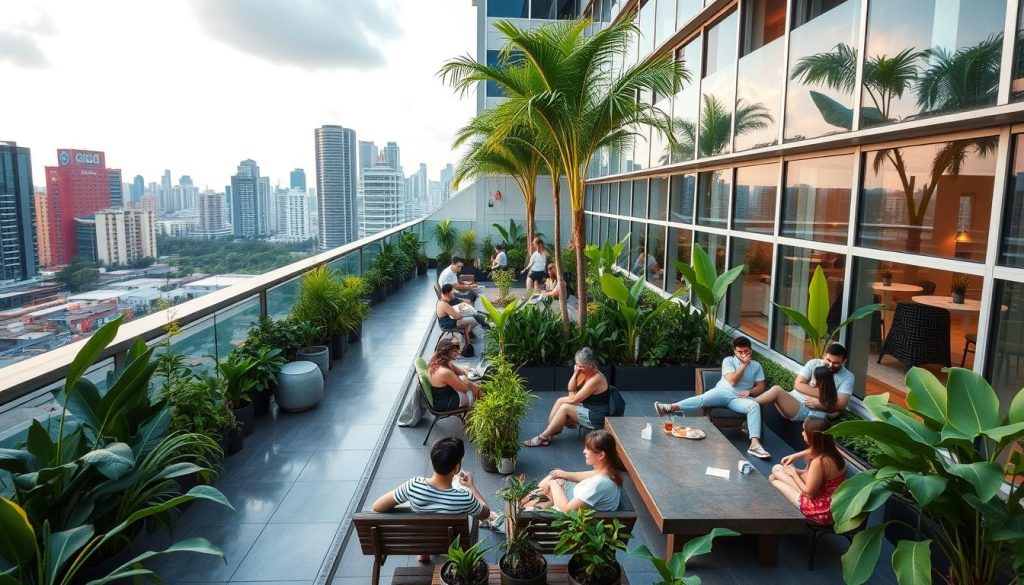
Rooftop terraces turn unused spaces into fun spots. They offer great views of Singapore and are perfect for events, meals, or unwinding. Well-designed terraces help people get to know each other, building a strong community.

In Singapore, co living faces many challenges. One big issue is finding a balance between privacy vs. community needs. People want their own space but also enjoy being part of a community. Designers must find ways to meet these needs without losing the sense of community.
Privacy is key in co living spaces. People need quiet time for work, rest, or just thinking. Designers use soundproofing, smart placement of shared areas, and private spots to help. This way, everyone gets the privacy they need while also enjoying community life.
Good space management solutions make co living better. With more people living together, planning is vital. Kitchens and lounges need to be big enough for everyone but not too big. This way, people can enjoy each other’s company without feeling cramped.
The co-living scene in Singapore is growing fast. It’s filled with new designs and successful projects. My Posh Pad, Dash Living, and Figment are leading the way. They focus on building community, offer cool amenities, and have flexible leases that appeal to young professionals and expats.
Hmlet’s new 150-room facility at Cantonment Road is a big deal. Common plans to add almost 2,000 units by 2019. Ascott is also expanding, aiming for nearly 900 units by 2021.
Mamahome got S$20 million in funding, with City Developments Limited investing 20%. Hmlet also got S$2 million from Aurum Investments. These moves show co-living is seen as a solid business. Successful projects keep their spaces full and make residents feel at home.
Co-living has grown a lot, with many success stories. A key lesson is using tech and engaging with the community to improve living. Most offer flexible leases, attracting both short-term visitors and locals. Prices range from S$600 for small rooms to S$8,750 for luxury ones.
These projects teach us the value of good management and following rules. They create lively spaces where people can make lasting connections. The sector is evolving, promising more sustainability and flexibility.
| Co-Living Project | Units Offered | Average Price Range (SGD) |
|---|---|---|
| Hmlet Cantonment Road | 150 | From $1,600 |
| Common | 2,000 (planned) | From $800 |
| Ascott | 890 (planned) | From $1,200 |
| Mamahome | Variable | From $1,100 |
| Dash Living | 800 | From $600 |
The world of co living is changing fast, thanks to new trends. We see a big push for community, green living, and creative designs. Hybrid living and tech integration are making shared spaces better.
New co living trends are changing city living. Here are some key points:
We dream of co living spaces that go beyond the usual. We want to create places that build connections and care for the planet. Our goal is to make vibrant communities that support both people and the environment.
| Trend | Description | Impact |
|---|---|---|
| Hybrid Living | Spaces that blend residential and short-term accommodations | Attracts digital nomads and local professionals |
| Sustainability Focus | Implementing eco-friendly technologies and materials | Reducing carbon footprint and boosting brand image |
| Smart Home Integration | Using tech to improve living experiences | Makes life more comfortable, secure, and efficient |
| Community-Centric Design | Designs that encourage interaction and shared spaces | Builds a sense of community and fights loneliness |
In today’s urban world, designing co living spaces comes with its own set of challenges and chances. Our team offers professional design consultation for vibrant shared areas. We use our deep knowledge and experience to help you create a space that fosters community and efficiency.
Our experts can help you add shared amenities like kitchens, lounges, and workspaces. These features cut down on waste and boost social connections among residents. We focus on using space wisely and choosing furniture that does more than one thing.
We aim to support you in designing co living spaces that meet the needs of many. Whether you’re dealing with smaller spaces or looking for cost-effective solutions, we’re here to assist. Reach out to us on WhatsApp at +65 9434 1391 for a free quote. Learn more about our services and special offers to make your co living space perfect.
Co living design focuses on creating shared living spaces. It aims for comfort, community, and function. This makes living spaces rich and fulfilling for everyone.
Co living offers affordable living with lively shared areas. It encourages socializing, boosts emotional health, and fosters cultural exchange among different people.
Technology makes co living better by adding smart home features. These include automated lights and app-controlled amenities. They make living easy and convenient for everyone.
Modern co living spaces use eco-friendly materials and energy-saving tech. This includes solar panels. It helps reduce environmental harm while promoting a green lifestyle.
Personalization lets residents make their spaces unique. It makes them feel at home. It also balances shared and private areas for both socializing and alone time.
Outdoor areas like gardens and terraces offer nature access. They encourage community bonding and provide places for relaxation and social events.
Challenges include keeping privacy while encouraging community. It’s also about managing shared spaces well. This ensures they don’t invade personal areas.
Successful projects like My Posh Pad, Dash Living, and Figment show great design and community focus. They offer rich amenities for a great living experience.
Future trends include hybrid living and more smart tech. There will also be a bigger emphasis on sustainability and wellness in co living spaces.
We provide design consultation to improve space and add tech. We help create a lively community culture for your co living project.
Nestled in the bustling Singapore, Livhola is a co-living space crafted for those who seek comfort, convenience, and community.
© 2024 Livehola. All Rights Reserved