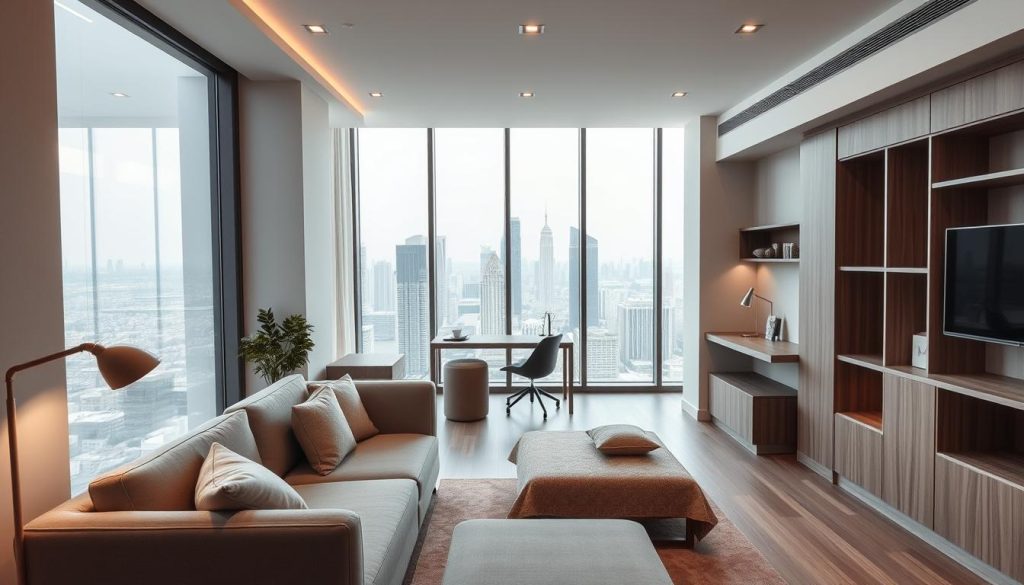
As we explore new ways to live in cities, innovative co-living spaces are changing how we interact and live in Singapore.
These modern spaces focus on community-centric and sustainable living. They’re becoming a hit with young professionals and expats.
We’re excited to dive into the latest co-living design trends in Singapore. We invite you to join us on this journey. Ready to see the future of urban living? Contact us via WhatsApp at +6594341391 to learn more about our community living spaces. Check out our current promotions and rates, and schedule a no-obligation viewing.
Key Takeaways
Innovative co-living spaces are on the rise in Singapore.
Community-centric and sustainable living are key trends.
Co-living spaces are popular among young professionals and expats.
Modern designs are transforming urban living.
Contact us to learn more about our community living spaces.
The Evolution of Co-Living in Singapore
The way people live in Singapore is changing. We’re seeing more flexible and community-focused living options. This shift is driven by new lifestyles and demographics.
From Traditional Housing to Modern Co-Living Spaces
Singapore’s housing market used to focus on private and public apartments. But now, Singapore housing includes co-living spaces. These offer modern amenities and a community feel.
Companies like Hmlet and Figment lead this change. They design spaces for young professionals and expats.
These co-living spaces have innovative designs and amenities. They make living better, promoting a modern living lifestyle.
The Growing Demand for Alternative Living Arrangements
In Singapore, more people want alternative housing. Young professionals and expats are looking for flexibility and community. Co-living spaces meet these needs with affordable and convenient options.
Looking ahead, co-living will be key in shaping co-living spaces in Singapore.
Understanding the Co-Living Concept in Singapore's Context
The co-living concept in Singapore is growing fast. It’s important to know what makes it special and how it differs from regular rentals.
What Makes Co-Living Unique in Singapore
Co-living in Singapore combines community, flexibility, and convenience. Places like Cove and ST Signature are favorites. They offer many amenities and services for the local market. Smart home technology and community-centric design stand out in Singapore.
Key Differences Between Co-Living and Traditional Rentals
Co-living is different from traditional rentals in a few big ways. Let’s look at cost and flexibility.
Cost Comparison and Value Proposition
Co-living is often cheaper than regular rentals. The value proposition is in the all-inclusive price. This covers utilities, internet, and access to amenities. It makes budgeting easier for residents.
Flexibility and Convenience Factors
Co-living offers flexibility in lease length and quick move-ins. This is great for young professionals and expats. They don’t have to sign long leases. Having amenities and services on site makes it even more appealing.
Current Co Living Design Trends Reshaping Singapore's Housing Landscape
The future of co-living in Singapore is changing. Design trends are making living spaces more efficient, smart, and inspired by nature. This shows that how we live is changing a lot.
Minimalist and Multifunctional Spaces
Minimalist and multifunctional spaces are big in co-living design. Places like Lyf Funan and Dash Living use modular furniture and flexible layouts. This makes the most of the space and meets different needs of residents.
Smart Home Integration
Smart home technology is also a big trend in Singapore’s co-living spaces. It lets people control things like lighting, temperature, and security easily. This makes living more convenient and efficient.
Biophilic Design Elements
Biophilic design, which brings nature into living spaces, is popular in Singapore. It includes things like green walls, lots of natural light, and natural materials. This design makes living healthier and more sustainable, fitting with the trend of wellness and sustainability.
Design Trend
Description
Benefits
Minimalist and Multifunctional Spaces
Modular furniture and versatile layouts
Maximizes space utility, enhances living experience
Smart Home Integration
Control over lighting, temperature, and security
Enhances convenience, efficiency, and comfort
Biophilic Design Elements
Incorporation of natural elements and materials
Promotes healthier and more sustainable living
Innovative Space Optimization Techniques in Singapore Co-Living
Co-living spaces in Singapore are getting smarter. We’re seeing more use of clever design and tech to make rooms bigger. This is all about making the most of every inch.
Transformable Furniture Solutions
Transformable furniture solutions are a big deal now. These pieces can change to fit different needs. For example, a sofa can turn into a desk, or a dining table can fold up.
Vertical Space Utilization
Vertical space utilization is another smart move. Using walls and lofts adds more room without needing more space. It’s all about going up, not out.
Creative Storage Solutions
Creative storage solutions are being used too. This includes built-in storage systems and multipurpose storage furniture.
Built-in Storage Systems
Built-in storage fits right into the room. It offers lots of storage without making the space look cluttered. Think under-bed storage, hidden spots, and wall shelves.
Multipurpose Storage Furniture
Multipurpose furniture does more than one thing. Like a storage ottoman that’s also a seat, or a coffee table with hidden storage. It’s both useful and saves space.
Community-Centric Design
Co-living spaces focus on building a community. They use design to bring people together. This creates a place where everyone feels welcome and connected.
Collaborative Workspaces
Workspaces are key in co-living. They let people work, study, or think together. Companies like Figment make spaces for all kinds of workers.
Social Interaction Zones
These zones help people meet and bond. They can be lounges or outdoor spots. They offer chances to make friends and feel part of a community.
Communal Kitchens and Dining Areas
Kitchens and dining areas are common in co-living. They’re where people share meals. This builds friendship and a sense of belonging.
Entertainment and Relaxation Spaces
Spaces for fun, like game rooms or movie theaters, are also important. They let people relax and meet others. They make living there more than just a place to stay.
Design Feature
Purpose
Benefits
Collaborative Workspaces
Productive environment for work and study
Increased productivity, networking opportunities
Social Interaction Zones
Fostering connections among residents
Building relationships, sense of community
Communal Kitchens and Dining Areas
Sharing meals and socializing
Camaraderie, sense of belonging
Sustainable and Eco-Friendly Design Approaches
Looking into the future of co-living in Singapore, we see that sustainable design is essential. People are now more aware of environmental issues. This awareness has led co-living spaces to add eco-friendly features to their designs.
The co-living sector is moving towards sustainability fast. This change comes from both what people want and the need to protect the environment. We see this in many parts of co-living design, like energy-saving systems and green materials.
Energy-Efficient Systems in Singapore's Climate
Singapore’s warm weather makes saving energy a big challenge. Co-living spaces are using smart energy-saving systems to tackle this. For example, LED lights, efficient air conditioning, and smart home tech help cut down energy use.
Companies like Dash Living are leading in using these energy-saving solutions. Their designs aim to use energy wisely, saving money and the planet.
Energy-Efficient Feature
Description
Benefits
LED Lighting
High-efficiency lighting that uses significantly less energy
Reduces energy consumption and costs
Smart Home Systems
Integrated systems that manage energy use in real-time
Optimizes energy consumption, enhances convenience
Energy-Efficient Air Conditioning
Advanced AC systems designed for high efficiency
Reduces energy consumption, lowers utility bills
Sustainable Materials and Practices
Using sustainable materials is also key in eco-friendlyco-living design. Providers are choosing materials that are recycled, recyclable, or sustainably sourced.
For instance, using reclaimed wood for furniture and decor is both stylish and eco-friendly. It reduces waste. Also, materials with low VOCs are used to improve air quality, making living spaces healthier.
By choosing sustainable materials and practices, co-living spaces in Singapore are cutting down their environmental impact. They are also making living spaces healthier for their residents.
Technology Integration in Modern Co-Living Spaces
Technology is changing co-living in Singapore. It makes living easier, safer, and more connected. Studies show that tech in co-living improves life quality.
Smart Home Automation Systems
Smart home tech is changing co-living. It lets people control their homes easily. For example, Lyf Funan lets you change lights, temperature, and security with a click. Smart home technology saves energy and money too.
Digital Community Management Platforms
Digital platforms help manage co-living spaces. They make it easy to talk, plan events, and ask for help. Effective community management creates a friendly and lively place to live.
Access Control and Security Features
Access control and security are key. Modern systems keep homes and areas safe. Experts say, “Secure access systems are essential in today’s co-living spaces.”
Community Engagement Applications
Apps for community engagement are important. They help people meet, join activities, and get updates. Technology helps build a strong community spirit.
Cultural Influences on Singapore's Co-Living Design
Cultural influences shape the design of co-living spaces in Singapore. The city’s diverse culture is seen in its co-living spaces. Here, traditional and modern elements blend perfectly.
Fusion of Eastern and Western Design Elements
Co-living spaces in Singapore mix Eastern and Western design. For example, Figment uses traditional elements in modern spaces. This blend is seen in natural materials, minimalist decor, and cultural motifs.
Incorporating Local Heritage in Modern Spaces
Adding local heritage to co-living spaces adds character and a sense of belonging. Elements like Peranakan tiles or Malay wood carvings are used. They bring authenticity to modern spaces.
Design Element
Cultural Influence
Example in Co-Living Spaces
Peranakan Tiles
Chinese and Malay Heritage
Used in communal areas for decorative purposes
Malay Wood Carvings
Malay Cultural Influence
Incorporated into furniture and wall decor
Minimalist Decor
Western Design Influence
Used in individual living spaces for a clean aesthetic
Wellness-Focused Design Elements in Co-Living
Co-living spaces now focus on wellness design to improve residents’ lives. This change shows how important mental and physical health are. It’s about creating a whole living environment.
Mental Health Considerations in Space Design
Mental health is key in designing co-living spaces today. Places like Dash Living add features for mental well-being. They use natural light optimization and quiet areas for relaxation.
This helps build a supportive community. It supports residents’ mental health.
Fitness and recreation areas are vital in co-living spaces. They boost physical health and overall well-being. Modern co-living places have top-notch gyms, yoga studios, and outdoor spaces.
Exploring Singapore's Most Innovative Co-Living Spaces
Innovative co-living spaces are changing how we live in Singapore. The city is seeing more unique and modern places to live. These spaces meet different needs.
Urban Co-Living Developments
Urban co-living is becoming popular. It’s in high-demand areas where housing and convenience are key.
Central Business District Options
Co-living in the Central Business District is close to work. Places like Hmlet and Lyf Funan lead the way. They offer modern features and services.
City Fringe Alternatives
City fringe co-living is a budget-friendly choice. It’s not too far from the city. These spots offer a calm vibe and easy access to city life.
Suburban Co-Living Communities
Suburban areas are also embracing co-living. They offer a relaxed lifestyle and a strong sense of community.
Experience Our Community Living Spaces
Discover our co-living spaces. They’re built for connection and belonging. Our communities are special.
Contact Us for Current Promotions and Viewings +65 9434 1391
Want the latest deals and a tour? Call us at +65 9434 1391. We can’t wait to meet you.
“Co-living is not just about sharing a space; it’s about creating a community that thrives on mutual respect and understanding.”
Conclusion: The Future of Co-Living Design in Singapore
As we wrap up our look at co-living design in Singapore, it’s clear the sector is set for big growth. JLL predicts over 12,000 units by 2025, a 33% increase from now. The market size could reach S$650 million, showing a bright future.
More people, like those under 35, want communal spaces over private ones. This demand is pushing co-living design to get creative.
CBRE says we’ll see more “silver co-livers” by 2030. Gen Z and seniors will make up more of the co-living crowd. Technology, like AI for matching roommates, will make living together better.
For more on trends and forecasts in Singapore’s co-living scene, check out Voffice’s analysis. As co-living design keeps evolving, we’ll see more green, community-focused, and tech-rich spaces. These will meet the varied needs of Singapore’s residents.
What is co-living, and how does it differ from traditional rentals?
Co-living is a housing type where people share common areas and amenities. It offers cost savings, flexibility, and convenience. Unlike regular rentals, co-living spaces aim to build a community among residents.
What are the current co-living design trends in Singapore?
In Singapore, co-living design trends include minimalist and multifunctional spaces. They also include smart home integration and biophilic design. These trends aim for efficient space use, tech advancements, and wellness.
How do co-living providers in Singapore incorporate sustainable design approaches?
Co-living providers in Singapore use sustainable design. They include energy-efficient systems and sustainable materials. This reduces the space’s carbon footprint and makes it eco-friendly.
What role does technology play in modern co-living spaces?
Technology is changing co-living spaces. It allows residents to control their spaces with smart home systems. It also supports digital community management and engagement apps.
How do co-living spaces in Singapore promote wellness and mental health?
Co-living spaces in Singapore focus on wellness. They include fitness areas and recreation spaces. These features help residents stay physically and mentally well.
What types of co-living spaces are available in Singapore?
Singapore has various co-living spaces. You can find urban developments and suburban communities. They cater to different needs and preferences.
How can I learn more about co-living spaces in Singapore and schedule a viewing?
Contact us via WhatsApp at +65 9434 1391. Learn about our community living spaces and schedule a viewing.
What is the future of co-living design in Singapore?
The future of co-living design in Singapore looks promising. It will focus on community, sustainability, and technology. This will make living more connected, sustainable, and fulfilling.