

In Singapore, where tall buildings meet the sky and diversity is everywhere, co-living spaces are a new answer. They help young professionals deal with the tough housing market. Finding a new place can be both exciting and scary.
Modern co-living architecture mixes comfort, community, and affordability. These designs offer a safe space for privacy and social connections. They turn simple housing into a place that feels like home.
Co-living spaces cost between $800 and $3,100 a month, based on where you are and what you get. Places like Casa Mia Co-Living and lyf one-north show a careful thought in design and community. They offer more than just a place to live; they give support, friendship, and a sense of belonging.
Learn more about our mission to change how we live. As we dive into co-living spaces architecture, let’s look at the ideas behind these designs. They have a big impact on how we live in cities.
Co-living is changing how we see shared housing and community living. It lets people share big living areas but keeps their bedrooms private. This is a big help for city folks who want to save money and feel part of a community.
Co-living mixes private and shared living. People have their own rooms but share things like kitchens and dining areas. It’s really popular with millennials who can’t afford to live alone. Cities like Berlin and Tokyo are starting to see it as a good way to meet different living needs.
Co-living offers more than just cheaper rent. It creates a network of support and safety among residents. This is a big difference from living alone in a house.
Co-living has roots in old ideas about living together. It’s becoming more popular, showing a shift towards valuing experiences over owning things. Co-living is a sign of innovation and community in city living.
| Feature | Co Living Spaces | Traditional Apartments |
|---|---|---|
| Cost | 30-40% cheaper | Standard market rate |
| Community | Strong support networks | Often isolated |
| Lease Flexibility | Short-term agreements | Long-term commitments |
| Amenities | Shared spaces include co-working areas, gyms | Private units with limited community access |
Co-living architecture has changed a lot, showing we value human connection and living in cities. It draws from old ideas of shared living. Today, we see more focus on community in our designs.
As cities get denser and housing costs rise, co-living spaces are becoming more popular. We’re seeing designs that mix personal space with areas for everyone to share.
Co-living has been around for centuries. Today’s designs are all about being flexible, easy to get to, and open. Places like Abakus in Basel show this, with shared courtyards that bring people together.
The Academie project in Turnhout is another example. It kept its old look but made it work for today’s needs, blending history with community.
Modern co-living spaces focus on making life better for residents. Open layouts, like in La Balma, balance privacy with community. Haus 6 in Berlin shows how new and old can mix, using materials like concrete and steel.
Places like Zellige in Nantes have shared areas and workshops for families. Post-Covid, there’s a big push for co-working and co-living. This means we’re looking at how to mix personal and shared spaces in our buildings.
Young people today want to move easily and live in shared spaces. As we move forward, we need to create spaces that meet our needs and build community. ArchDaily has more on how to do this well.
Sustainability is key in designing co-living spaces. We use eco-friendly materials and designs to help the planet. This makes living spaces better for both people and the environment.
Choosing the right materials is vital for sustainable co-living. These materials are often renewable and cut down on carbon emissions. Examples include:
Using these materials reduces waste and creates a healthier home. It’s part of our goal to cut waste by 40% in our projects.
Energy efficiency is a big deal in co-living design. Buildings that save energy well can use 25-40% less power. Solar panels help cut down on fossil fuel use by almost half.
Shared systems can also save residents up to 20% on bills. This is good for the wallet and the planet.
Getting people involved in saving energy makes them happier. When communities work together, everyone benefits. This is good for the planet and for people’s well-being.
| Energy Efficiency Measure | Estimated Impact |
|---|---|
| Passive energy-saving designs | Reduce energy dependency by 25-40% |
| Solar panel integration | Decrease reliance on non-renewables by 50% |
| Shared energy-efficient systems | Lower utility bills by up to 20% |
| Effective waste reduction strategies | Reduce landfill contributions by 40% |
We aim to make living spaces vibrant and inclusive. Our designs focus on making places welcoming for everyone. This means creating spaces where people can live together well.
In these spaces, we design layouts and amenities that encourage people to come together. This helps build strong community bonds.
Social areas are key to bringing people together. We add things like gardens and shared rooms to encourage people to meet. These areas help residents feel connected.
Places like kitchens and lounges are where people gather. About 60% of residents say they meet more people in these spots. We also use smart tech to make these spaces even better for everyone.
Feeling at home is important in co-living spaces. We create areas for dining and fun to help people bond. This way, they can form lasting friendships.
Take Trailhead Community, for example. It’s made for people with special needs. It has smart locks and systems to keep everyone safe and independent.
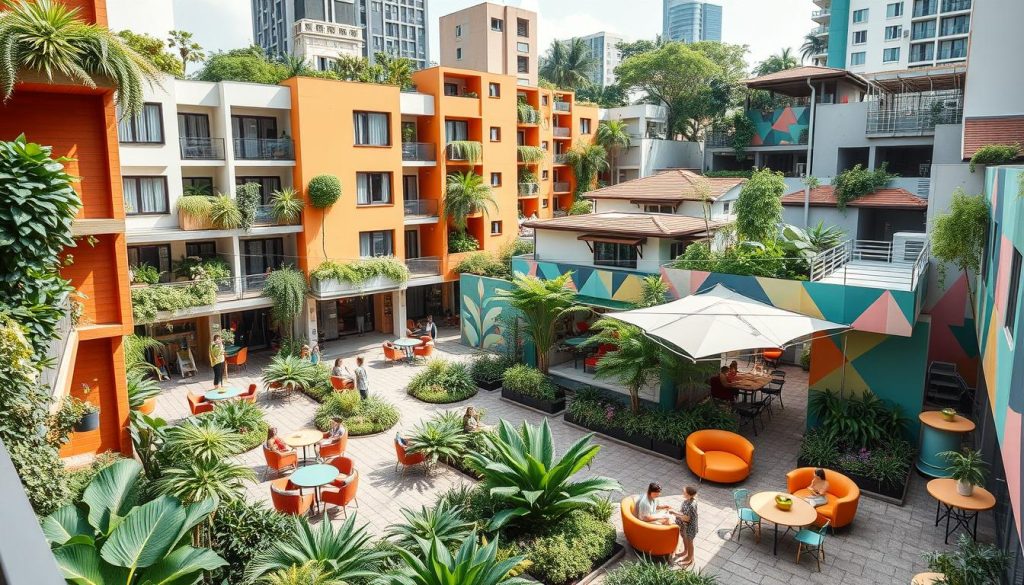
In today’s fast-paced urban environment, technology is key in co-living spaces. Modern co-living architecture includes smart features that residents expect. These features, like app-controlled systems, make living comfortable and convenient.
Technology in co-living offers many benefits. Some key features include:
These tech advancements make living more personal and build community. Studies show that up to 70% of residents feel more connected due to design that encourages socializing.
Technology does more than just make living comfortable; it connects residents. Virtual reality spaces help people separated by distance stay connected. This boosts satisfaction and mental well-being in the community.
Flexible spaces in modern co-living architecture also increase common area use by up to 40%. Spaces like communal kitchens and shared amenities encourage more interaction. This makes residents 50% more likely to connect with each other.
| Technology Features | advantages | Impact on Community |
|---|---|---|
| Smart Locks | Enhanced security and ease of access | Increased trust among residents |
| Automated Thermostats | Energy efficiency and comfort | Reduces operational costs |
| App-Based Systems | Convenient management of shared facilities | Fosters collaboration and organization |
| Virtual Reality Spaces | Enables remote social interaction | Strengthens community ties |
These tech features show that modern co-living is about more than privacy and comfort. It’s about building a connected community. Technology in co-living creates a space where collaboration, convenience, and connection thrive.
We’ve looked into co living developments in Singapore and worldwide. These studies show us the changing world of co-living spaces. They give us clues for making better co-living places in the future.
Singapore is leading in co living ideas. Places like Casa Mia and Figment focus on community. They offer convenience and welcome everyone, making them popular.
Old buildings are being turned into new co-living spots. For example, the Calq and Bond Society made a 1970s office into a lively place for work and living. This shows how we can make cities better.
Looking at co-living projects worldwide teaches us a lot. Cutwork’s design meets the needs of single-parent families. This shows the value of designing for different groups.
Projects like SODA in Liverpool mix wellness and work. They appeal to today’s lifestyle. French 2D’s complex for different ages shows how housing can be creative and successful.

| Project Name | Location | Key Features |
|---|---|---|
| Casa Mia | Singapore | Community-focused design |
| Figment | Singapore | Convenience and inclusivity |
| Calq & Bond Society | London | Repurposed office space |
| Common | New York | Affordable living options |
| Humanitas Deventer | Netherlands | Multi-generational engagement |
| The Collective | London | Large-scale co-living |
These examples teach us a lot. Good co-living designs think about where they are, who they’re for, and how to bring people together. These lessons guide us as we move forward in co-living architecture.
Co-living spaces are attractive, but they come with big challenges. Zoning laws are a major issue. They tell us how to build these spaces. We need to find a way to balance privacy and community.
We want to make sure everyone feels comfortable. But we also want to keep the community spirit alive.
Zoning laws set the rules for building. They limit how flexible co-living spaces can be. These laws affect the size and type of property.
Understanding these laws is key. We need to design spaces that are both functional and appealing. This means knowing what the community needs and how to meet those needs.
We aim to create spaces where everyone can have their own space. But we also want to encourage community. This means designing spaces that support both.
One challenge is avoiding overcrowding. We don’t want too many people in one place. This could strain local services. Finding the right balance is important.
| Challenges | Description |
|---|---|
| Zoning Laws | Regulations limiting property usage and flexibility in design. |
| Privacy Concerns | Need for private spaces within communal settings. |
| Infrastructure Strain | Overcrowding risks impacting local services. |
| Shared Amenities | Balancing communal resources with personal needs. |
Our goal is to create spaces that are both personal and communal. Knowing zoning laws and finding the right balance is key. For more information, check out our room rentals.
Urbanization and changing demographics will shape the future of co-living spaces. New designs and functions are emerging. These changes meet the evolving needs of residents.
New technologies and sustainable practices are leading the way. Modular designs and smart home features offer convenience and efficiency. Eco-friendly elements will become more common, appealing to those who care about the environment.
Already, over 80% of co-living operators are adding eco-friendly features. These include communal recycling and shared transportation.
The demand for co-living spaces is expected to rise by 20% annually in big cities. This is due to their cost savings, which can be 20-30% less than traditional rentals. Young professionals and digital nomads make up about 60% of co-living residents.
This shows a shift towards flexible living options for diverse lifestyles.
Here are some predictions based on current trends:
| Trend | Forecasted Impact |
|---|---|
| Increase in flexible leasing terms | Higher occupancy rates as residents seek short to medium-term arrangements |
| Integration of smart technology | Improved communication and access to amenities for residents |
| Sustainability initiatives | Reduced carbon footprints by up to 40% through shared resources |
| Growth of social community events | Increased resident satisfaction and likelihood to extend leases |
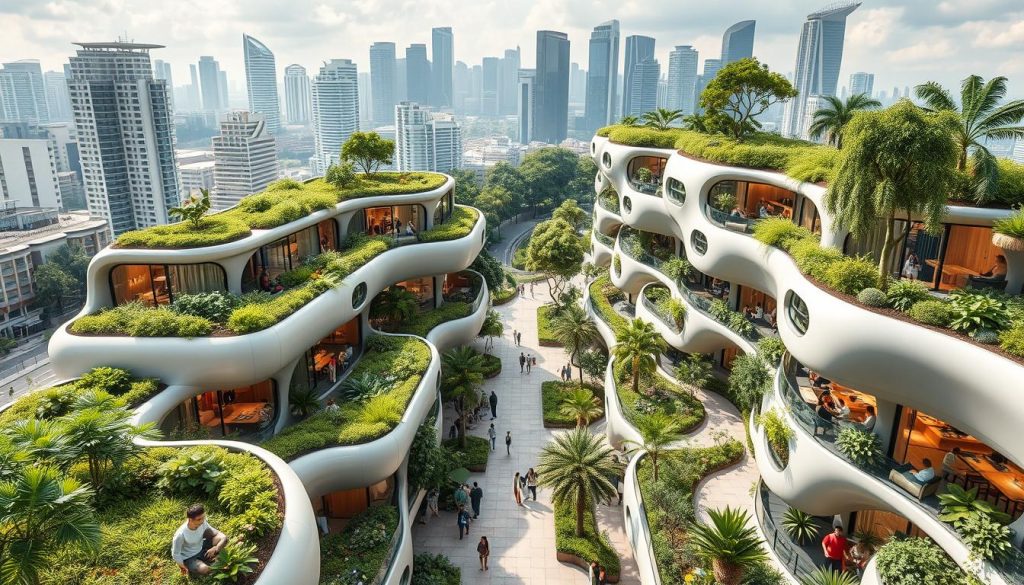
We are on the edge of a significant change in co-living spaces. They will blend community and technology, improving our living experiences. This future promises better connectivity, sustainability, and community integration.
As we move forward, staying updated on co-living trends is key. Together, we can adapt to these changes and transform our urban living spaces.
We are at a key moment. Co-living spaces are changing urban areas. They offer affordable housing, like in Singapore. These spaces create a community feeling among different people.
Living in big cities is very expensive. Co-living spaces help by cutting costs by up to 30%. This attracts many, with 60% being young adults. The co-living market is growing fast, reaching $13.9 billion by 2025.
Co-living spaces help cities grow. They turn old buildings into lively spots. The value of co-living is set to hit £50 billion. They can make old buildings more profitable, with a 12% increase in income.
Our co-living projects build community. Over 70% of people feel more connected here. These spaces are more than homes; they boost social life and local economies. They’re changing how we live in cities.
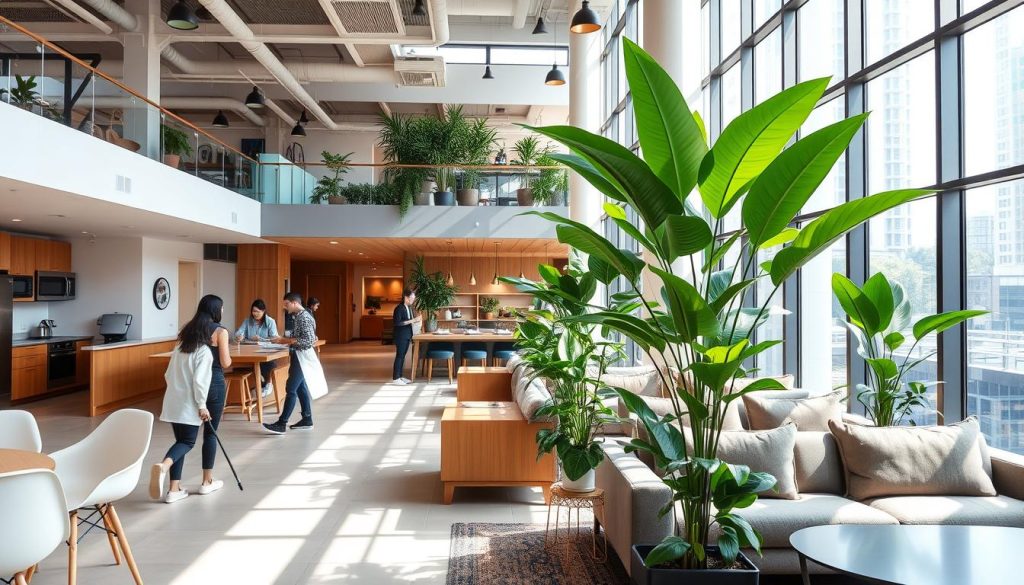
Cleanliness is key in co-living spaces for a healthy environment. Keeping shared areas clean is vital for everyone’s well-being. Professional cleaning services are essential to maintain a high standard of comfort and satisfaction.
Clean communal spaces are vital in shared living. They affect social dynamics and overall happiness. Regular cleaning stops dirt and germs, building a sense of community.
Perception of cleanliness is a big factor in choosing a co-living space. It’s a key part of what we offer.
We follow strict quality standards in shared living. We have tailored cleaning schedules for our residents. Our team regularly checks to keep the space inviting and well-kept.
Our staff is thoroughly trained to handle any situation. This ensures we meet our community’s expectations.
| Cleaning Service Features | Description |
|---|---|
| Regular Cleaning | Scheduled cleanings of common areas such as kitchens, living rooms, and bathrooms. |
| Professional Team | Trained staff dedicated to maintaining high hygiene standards. |
| Quality Assessments | Routine quality checks to ensure adherence to cleanliness standards. |
| Adaptable Services | Flexible cleaning schedules based on resident preferences and needs. |
| Community Engagement | Encouraging residents to participate in maintaining cleanliness and attending community events. |
We aim to create clean, welcoming spaces for our residents. Quality and satisfaction are our top priorities. We strive to make co-living in Singapore a great experience.
If you want to make your co-living space cleaner, we invite you to reach out. We focus on keeping your living area clean and welcoming. Our cleaning services are designed to fit different living needs, ensuring everyone is happy.
Feel free to contact our cleaning service for a free quote. We offer flexible rental plans, from month-to-month to nightly. Our prices start at SGD1,100/month, with no hidden fees, making your stay better.
Keep updated with our cleaning services promotions by WhatsApp at +65 9434 1391. We have special deals for our residents, ensuring everyone enjoys our top-notch amenities. With over 4,000 happy professionals hosted in 34 years, our service keeps improving.
Co-living spaces are affordable and build a strong community. They offer shared amenities for socializing. This model is great for young professionals, expatriates, and digital nomads, blending private and communal areas.
Co-living spaces use eco-friendly materials and designs. They focus on saving energy and resources. This makes them environmentally friendly, fitting modern living values.
Co-living spaces have private bedrooms and shared areas. These include kitchens, lounges, and event spaces. They’re designed for socializing and building community.
Technology is key in co-living. It includes smart home features like app-controlled lighting and high-speed internet. These make living more comfortable and connected.
Yes, co-living faces zoning law challenges. Designers must balance privacy with community goals. This ensures a comfortable space for everyone.
In Singapore, Casa Mia and Figment are examples of successful co-living. The Collective in London and Common in New York also show effective designs and services.
Co-living spaces address affordable housing needs. They revitalize unused properties and create sustainable communities. These support local economies.
The future of co-living looks bright. Expect innovations like modular designs and more technology. These will meet the needs of diverse urban residents.
Nestled in the bustling Singapore, Livhola is a co-living space crafted for those who seek comfort, convenience, and community.
© 2024 Livehola. All Rights Reserved