

Did you know that by 2030, the United Nations predicts 43 megacities globally? Most will be in developing countries. As cities grow, nearly 70% of the world’s population will live in cities by mid-century. This makes finding new housing solutions urgent.
Co-living spaces are a new answer to our changing cities. They mix community with modern design, making living affordable. Thoughtful designs can change how we live and connect in crowded cities.
This article will dive into the architectural shift in shared living. We’ll see how these spaces are not just homes but also hubs for lively communities.
To learn more about this new way of living, check out this insightful article on co-living. Join us as we explore new ways to live together.
In recent years, co-living spaces have become a big trend in Singapore. They offer a mix of private and shared areas, creating a sense of community. This approach helps make city living more affordable.
Co-living spaces are more than just a place to live. They encourage us to connect with others and our surroundings. This makes living together more meaningful.
Co-living spaces are designed to bring people together. They have shared areas like kitchens and lounges. This setup helps residents bond and share experiences.
Each unit usually has several bedrooms. This allows people to live together while keeping their privacy. It also makes living costs lower, with prices starting at about $3,500 a month.
The rise of co-living in Singapore shows a cultural shift. As cities grow, people want new ways to live together. This trend started with cooperative living and now meets the needs of single-person households.
The Singapore Land Authority has been working with stakeholders to support co-living. This shows their commitment to solving the housing crisis through shared living.
Urban living is changing, with a focus on experiences over owning things. Co-living spaces offer a place for socializing and feeling part of a community. They bring together different people, creating spaces for cultural exchange.
Our architecture for co-living spaces can reflect these changes. It supports a lifestyle that values community and connection.
Co-living spaces are evolving to focus on sustainability and community. Modern cohousing architecture brings new solutions that improve living and care for the planet. These designs create spaces where people can interact and feel a sense of belonging.
Green building is key in eco-friendly co-living. Features like solar panels and rainwater systems cut down environmental harm. These spaces are not just modern; they aim to be healthier for those who live there.
Using energy-saving tech and materials boosts these developments’ green credentials. This meets the needs of today’s eco-aware residents.
Co-living spaces are designed for community. They have areas for work, rest, and socializing. This encourages people to come together and build connections.
Spaces like communal kitchens and lounges spark conversations. They help create a strong community bond. At the same time, privacy features like soundproofing and private bathrooms ensure residents feel at home.

| Feature | Description |
|---|---|
| Solar Panels | Used for energy efficiency and cost savings. |
| Modular Furniture | Creates flexible spaces for different activities. |
| Soundproofing | Improves privacy and comfort in private areas. |
| Common Areas | Support social interaction and community living. |
By focusing on sustainability and community, we create co-living spaces that serve both individual and collective needs.
Co-living spaces are designed to build strong communities. They offer more than just a place to live. They create a lively atmosphere where people can connect through shared activities.
These spaces are built to foster friendships. Activities like communal dinners and workshops help people bond. This helps fight the loneliness often found in cities.
Collaborative living brings people together. Events and activities help residents connect over shared interests. From movie nights to cooking classes, these moments boost happiness and a sense of belonging.
Shared housing layouts help fight loneliness. They make it easier for people to make friends and build support networks.
Inclusivity is key in co-living spaces. We welcome people from all backgrounds. This diversity enriches the community and promotes understanding.
Supportive property management is vital. Careful tenant screening and conflict resolution ensure peace. Regular communication keeps the atmosphere positive for everyone.
Exploring today’s shared living spaces shows us the power of new design ideas. These ideas make our homes more comfortable and flexible. They blend function and beauty, fitting different lifestyles.
Modern homes are built with flexible areas at their core. These spots can change to fit many needs, like workspaces or cozy areas. With adjustable furniture and modular designs, we can make our homes our own.
This flexibility helps us use space better. It keeps up with our changing lives, both at home and work.
Smart tech is key in today’s urban living. It makes our daily lives easier and safer. Things like smart locks and app controls make our homes more efficient.
This tech also brings us closer together. It helps us manage our homes as a community. This makes our living spaces more connected and efficient.

Exploring successful co-living spaces, we see many models helping urban communities. Singapore is a standout with its lively co-living scene. It shows many examples of shared living architecture.
These spaces improve communal living and create engaging places for people to live.
In Singapore, we see models like The Hive and The Commons. They show the value of shared amenities in bringing people together. With well-designed areas and programs, they make spaces where people can grow.
These examples show how good design can tackle urban challenges. They make community living more attractive.
Looking beyond Singapore, we find global co-living examples that teach us a lot. In the U.S., Common, and in London, The Collective, are leaders in co-living. They focus on making life better for their residents.
These spaces are affordable and build a community feeling. By studying them, we learn how to create welcoming spaces for all. Their success guides us in improving co-living worldwide.
Co-living has a big impact on cities. It makes old buildings and empty lots into lively communities. This brings people together and helps the local economy grow.
Co-living spaces give new life to cities. They turn old buildings and empty lots into places full of life. This makes neighborhoods better and attracts new businesses.
Co-living spaces create jobs and bring in different people. This helps local businesses and boosts the economy. It also lets people save money and invest in their community.
Co-living spaces can make cities better and cheaper to live in. They encourage people to live more sustainably. Start this change by learning more at this insightful resource.
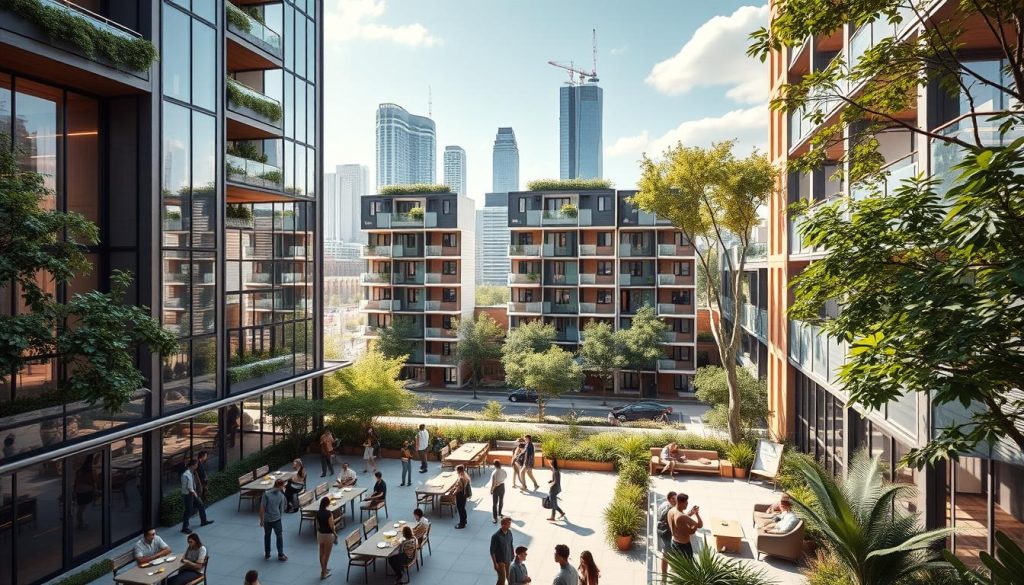
In co-living spaces, focusing on well-being is key. Using biophilic design brings many benefits. It makes the space look good and helps residents’ mental health.
Adding greenery, natural light, and calm water features helps a lot. These elements connect people with nature. This can greatly improve well-being in these shared living areas.
Biophilic design is more than just decoration. It creates a space that’s good for mental health. Studies show it boosts emotional well-being, energy, and community ties.
Features like air-purifying plants and sunlight make the air healthier. They also help people get along better. This way, we can make spaces that feel like nature, encouraging calm and socializing.
When planning co-living spaces, mental health is very important. Good design balances shared areas with private ones. This lets people socialize but also have alone time.
Safe and connected layouts help fight loneliness. Having peaceful, natural spots for relaxation is essential. This leads to a happy, supportive community.
Our goal is to make spaces that support both individual and group well-being. By doing this, we can make city living better and more fulfilling.
Co-living spaces are becoming more popular, but they also come with challenges. One big issue is making sure everyone has privacy. Good design should balance privacy with community feeling.
Privacy is key in co-living to keep everyone happy. Living together can be tough, mainly because of personal space. To solve this, smart design is needed.
These designs help everyone have their own space while being part of a community.
Starting co-living spaces can face many rules and laws. It’s hard to get past these to create shared living areas. Working with local officials is key to solving these problems.
By working through these rules, we can make co-living spaces that meet today’s city living needs.
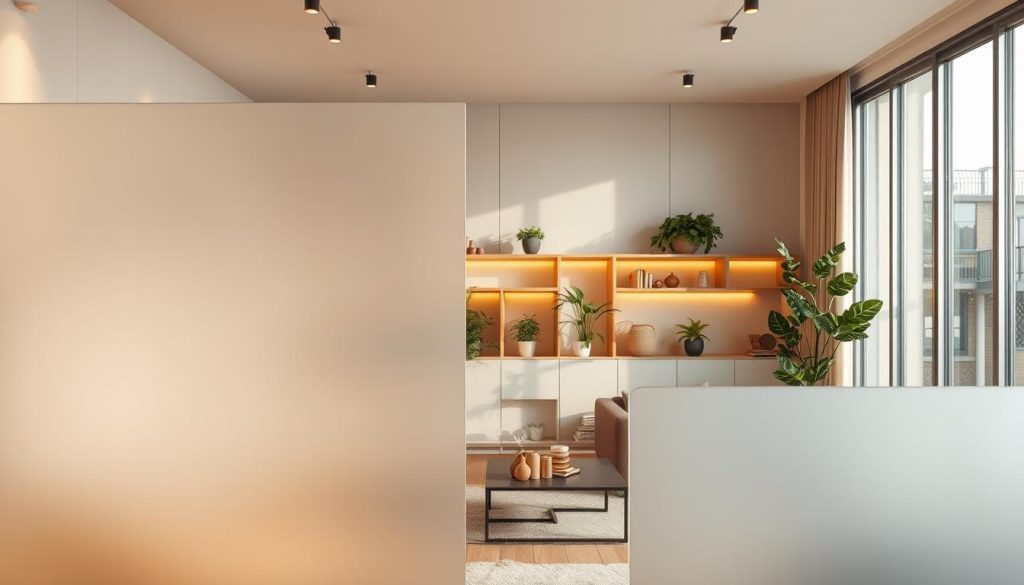
The co-living world is changing fast. New architectural ideas are key to this change. They meet the need for community and flexibility. Also, they focus on being eco-friendly, making living spaces better for the planet.
Young professionals are looking for affordable, community-focused places to live. This is changing what people expect from co-living spaces.
Future co-living spaces will have lots of natural light and smart tech. They’ll have vertical gardens and areas for people to meet. This reflects the trends in shared living today.
Places like these will have amenities like workspaces, libraries, and kitchens. These features make living better and attract people who want to live sustainably.
Urban dwellers’ needs are changing, and we must keep up. Today, people want comfort and to connect with others. This is good for co-living spaces.
Young professionals want places that are flexible and offer community. This means more flexible leases and new ways to live. By listening to these needs, we can make co-living spaces that more people will love.
Co-living spaces are becoming more popular, and cleanliness is key. We make sure these spaces are inviting and well-kept. Our team uses eco-friendly products and efficient methods to keep the air healthy for everyone.
We offer top-notch cleaning for co-living spaces. Our team tackles the unique challenges of co-living maintenance head-on. From cleaning kitchens to lounges, we pay attention to every detail.
Residents can save money because utilities, Internet, and maintenance are often included in the rent. This means they can focus on enjoying their space, knowing it’s clean and welcoming.
We’re here to help make your co-living experience vibrant! Call us on WhatsApp at +65 9434 1391 for the latest promotions and quotes. Let’s work together to make our shared spaces cleaner and more connected. Join us in making these spaces feel like home.
Co-living spaces are modern homes that mix shared areas with private rooms. They encourage people to connect and live together, making community a big part of life.
These spaces use green designs and energy-saving tech. They help reduce waste and create healthier homes, making living there better for the planet.
Great co-living spaces blend private and shared areas well. They use smart layouts and tech to bring people together, making everyone feel included.
Co-living spaces help people feel less alone by encouraging socializing. They offer places for group activities, which can make people happier and healthier mentally.
In Singapore, The Hive and The Commons are known for their unique designs and community features. Worldwide, Common and The Collective show how co-living can work well.
To keep privacy in co-living, architects use soundproofing and smart space planning. They make sure there are clear private areas, even in shared spaces.
Tech makes co-living better by making life easier and safer. It also helps people connect and manage their space, making it more enjoyable for everyone.
Today, people value experiences over things, which makes co-living appealing. It offers a chance to connect and build community in busy cities.
Co-living spaces deal with zoning laws and privacy issues. They need to work with local governments to find solutions that work for everyone.
The future looks bright for co-living, with a focus on being green and using new tech. It will offer more affordable, flexible, and community-focused living options.
Nestled in the bustling Singapore, Livhola is a co-living space crafted for those who seek comfort, convenience, and community.
© 2024 Livehola. All Rights Reserved